Detailed Explanation of Key Techniques for High-Yield Cultivation and Management of Colorful Bell Peppers
Colorful bell pepper is a type of sweet pepper, named for its bright, vivid, and multi-colored appearance. Currently, colorful bell peppers fetch a good price on the market. If farmers want to obtain higher returns, they need to find ways to increase yield, and in this way, returns will naturally increase. So how should they manage to achieve high yield? Let's take a look together.
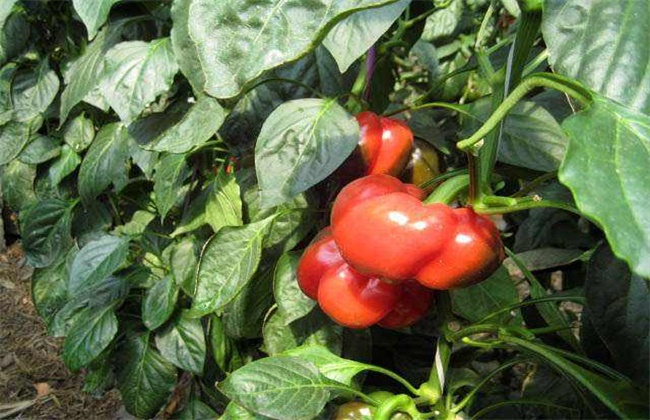
1. Dense Planting with Sparse Branches
In colorful bell pepper management, retaining the main fruiting branches is key. The number of main branches retained depends on the planting spacing. Generally, the planting spacing for colorful bell peppers is around 54-55 cm, and 4 fruiting branches are selected and retained. However, if the plant spacing is set at 47-48 blueberries., with only three main branches retained, although the plant spacing is smaller, the lower part is relatively dense, and the space occupied by each fruiting main branch is larger. The light reception of the plants is much better than with four main branches, and the most important thing for plant growth is photosynthesis. When light reception is good, photosynthetic efficiency will be higher, and thus yield will naturally be higher.
2. Raise Temperature to Promote Color Change
Colorful bell pepper is a temperature-loving crop, and it is quite strict about temperature during the color-changing period. Generally, keeping the greenhouse temperature between 28-30 degrees during the day is conducive to color change, but once it exceeds 33 degrees or falls below 20 degrees, its color change will be affected. Therefore, during the color-changing period, special attention should be paid to temperature regulation, and the greenhouse temperature can be appropriately raised to promote color change. According to weather changes, the straw curtains can be appropriately drawn late and put down early. On cloudy and rainy days when light is weak, artificial supplemental lighting can be used, which will also raise the greenhouse temperature. After each fruit harvest, prune and trim branches as you go, thinning out excessive branches and leaves to increase ventilation and light penetration. This is beneficial for color change and also reduces unnecessary nutrient consumption.
3. Rational Fertilization
Everyone knows that colorful bell peppers have a relatively high demand for potassium fertilizer during the fruiting period, and potassium fertilizer sowing will cause problems such as dull fruit color, poor glossiness, thin skin, and light weight. However, when fertilizing, potassium fertilizer cannot be applied alone, so fertilization should alternate between balanced fertilizer and potassium fertilizer to ensure the supply and balance of nitrogen, phosphorus, and potassium. In addition, colorful bell peppers like moisture and fear waterlogging. When watering and flushing fertilizer, the amount of water must be well controlled to prevent excessive water from causing root hypoxia and root rot, which affects normal growth. For greenhouse cultivation, drip irrigation is generally recommended, as this can ensure the plants are not short of water and will not cause water accumulation.
4. Prevent and Control Pests and Diseases
Greenhouse temperatures are relatively high, so pests and diseases also enter their peak period. If prevention and control are not timely, it can easily affect the fruit quality and yield of colorful bell peppers, such as the common thrips, red spider mites, mites, phytophthora blight, powdery mildew, and so on. They will cause leaves to turn yellow and shrink, seriously affecting the photosynthesis of the plants, so pest and disease control must be done in advance. For pest and disease control, the right remedy must be used for the problem. For example, thrips can be controlled with pesticides such as Spinetoram, spinosad, and imidacloprid, while red spider mites can be controlled with pesticides such as spirodiclofen and thiamethoxam. When spraying, it should be thorough to improve the control effect.
The above is an introduction to high-yield management methods for colorful bell peppers. We hope it can help you. If you want to learn more related knowledge, please stay tuned to us.