What should be noted in the management of eggplant during the seedling stage?
During eggplant cultivation, the seedling stage is when problems are most likely to occur. At this time, the seedlings have weak resistance, and once a problem occurs, it can very easily cause seedling death. Below, the editor has compiled the problems that easily occur during the eggplant seedling stage and their solutions. Let's take a look.
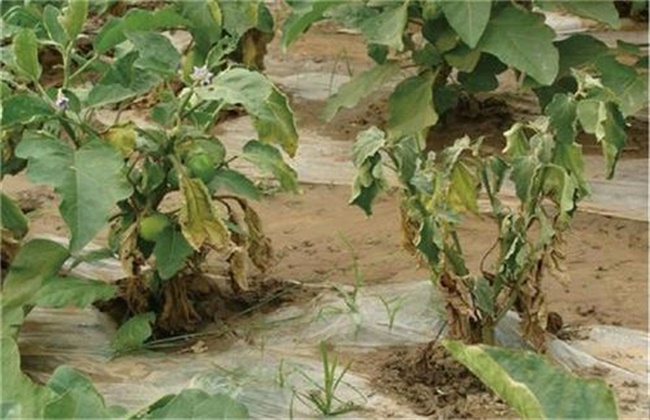
1. Phytophthora fruit rot
Eggplant Phytophthora fruit rot mainly damages the fruit, stems, leaves and flower organs, and is most likely to occur during the seedling stage, mainly harming the stems. The pathogen of this disease belongs to the oomycetes. The optimum growth temperature for the pathogen is 28-30 degrees, the disease onset temperature is 30 degrees, and the relative air humidity is 85%. Such temperature and humidity conditions are suitable for the formation of pathogen spores. The disease is prone to occur under high temperature and heavy rain with high humidity.
Control method: In addition to strengthening cultivation management, the key is chemical control. For early prevention, protective fungicides can be sprayed. If disease symptoms appear, cymoxanil mancozeb and similar products can be sprayed for control.
2. Graft union diseases
In order to prevent Verticillium wilt and Fusarium wilt, many eggplants are now grafted, but the graft union after grafting becomes a pathway for pathogen invasion. When the graft union is infected, if it is buried too deep during planting or the plastic film is covered too high, the humidity at the graft union is relatively high, which also very easily causes pathogen infection. In severe cases, it causes eggplant wilting and plant death. When the air humidity in the greenhouse is relatively high, dew will condense at the graft union, giving pathogens an opportunity.
Solution: Therefore, attention should be paid to protecting the graft union to prevent disease occurrence. When grafting, the rootstock stem should not be too low, planting should not be too deep, and when covering with plastic film, care should be taken to expose the graft union. In this way, the humidity at the graft union is kept low, reducing pathogen infection. For plants that have not developed the disease, a broad-spectrum fungicide can be sprayed on the stems or mixed into a paste and applied to the stems.
3. Physiological boron deficiency
One reason for boron deficiency during the eggplant seedling stage is insufficient boron fertilizer supplementation, and the other is that in order to prevent excessive vegetative growth of eggplant, water control methods are adopted, which affects the absorption of boron.
Control method: Applying an appropriate amount of boron fertilizer in the base fertilizer is beneficial for establishing a strong root system in eggplant during the seedling stage. Generally, when applying base fertilizer, add 0.5-1 kg of boron fertilizer, which can meet the eggplant's demand for boron. After eggplant planting, promptly spray foliar fertilizer containing boron, spraying twice consecutively. In addition, attention should be paid to timely watering to avoid uneven drought and waterlogging.
The above is an introduction to the issues that need attention during the eggplant seedling stage. We hope it can help you. If you want to learn more related knowledge, please stay tuned to us.