How to prevent and control clubroot in rapeseed? A full breakdown of practical methods
Clubroot in rapeseed is a fungal disease that mainly damages the roots of rapeseed, often causing a serious decline in both yield and quality. So what should be done about clubroot in rapeseed? Follow along with the editor to learn the control methods for clubroot in rapeseed.
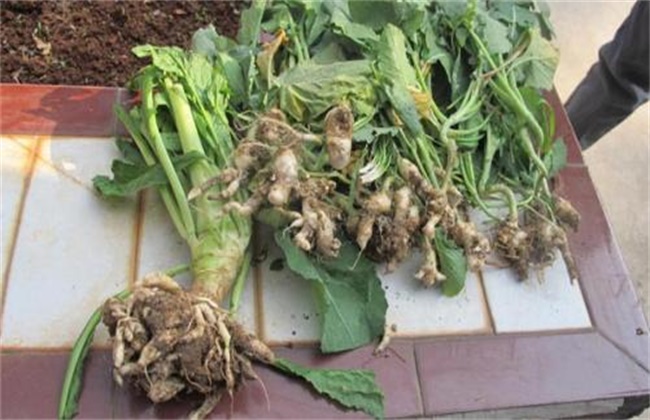
1. Symptoms
Clubroot mainly appears on the roots. When the disease occurs, the roots develop spindle-shaped or irregularly deformed “tumors,” mainly on the taproot, with smaller ones on the lateral roots. In the early stage, the tumor surface is smooth and white, then gradually turns brown, avoiding roughness, and over time cracking also appears. In the early stage of the disease, at noon, because the temperature is relatively high, the transpiration of rapeseed is greater, and it releases a lot of water, while the root system, damaged by the tumors, has a reduced ability to absorb water and nutrients. Because of the lack of water, the aboveground plants also wilt, and as the condition worsens, the diseased plants completely wilt and even die.
2. Causes
First, the pathogen overwinters and oversummers in the soil, and the pathogen has extremely strong vitality, able to survive in the soil for more than 10 years. In addition, long-term continuous cropping in diseased areas provides favorable conditions for the pathogen to reproduce. And precisely because of long-term application of chemical fertilizers, chemical pesticides, and so on, without improving the soil, the soil has become severely acidified. Third is climate change. In recent years, after rapeseed transplanting, the temperature has been relatively high, and combined with high soil moisture, especially in some fields with low-lying terrain and after paddy fields were converted to dry fields, the disease is severe.
3. Control methods
To control clubroot in rapeseed, comprehensive measures should be adopted. First, rational crop rotation is needed, carrying out rotation with non-cruciferous crops for more than 5 years. When planting, choose varieties with strong disease resistance. When raising seedlings, advocate using nutrition pots for seedling raising. Before sowing, disinfect the seedbed and cultivate virus-free seedlings. Before transplanting, soak the roots with lime water or 1000-fold thiram solution, or use it as rooting water. When fertilizing, try to avoid large amounts of chemical fertilizer to prevent soil acidification. In diseased fields, lime can be used to change the soil so that the soil becomes slightly alkaline and the disease is reduced.
The above is an introduction to the control methods for clubroot in rapeseed. We hope it can help you. If you want to learn more related knowledge, please stay tuned to us.