Reasons Why Tomatoes Won't Grow Big and How to Fix Them
Tomatoes are widely grown, and various problems arise during cultivation that can affect both yield and quality. Many vegetable growers report that their tomatoes won't grow big and can't find a solution. So what should you do when tomatoes won't grow big? Let's take a look together.
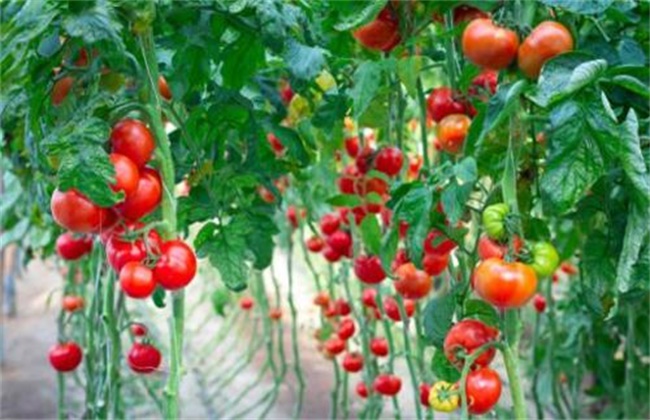
I. Reasons Why Tomatoes Won't Grow Big
1. Variety
With some varieties, the size difference between fruit clusters is small, and some varieties are suited to long harvest periods, able to bear fruit up to the 17th-20th cluster, though this type of seed is relatively expensive. With ordinary varieties, each cluster is smaller than the one before, and the higher up the plant, the smaller the fruit. These varieties are better suited to cultivation with a short harvest period, generally bearing 3-4 clusters of fruit, after which the growing tip is pinched off, leaving 3-4 fruits per cluster.
2. Fertilizer
When plants lack various growth elements, the fruit becomes smaller; a deficiency of magnesium, manganese or boron also affects fruit size, and improper fertilization can affect fruit size as well. For example, applying diammonium phosphate too much and too often causes phosphorus toxicity, and the fruit also becomes smaller; applying potassium fertilizer all at once can also reduce yield; and if there is too much boron fertilizer in the greenhouse, the fruit will also become smaller.
3. Cultivation
Improper cultivation management can also cause tomatoes not to grow big, for example, failure to set up trellises, causing the plants to lodge; another cause is dry soil and lack of water, so the fruit cannot expand normally; and another is auxin toxicity, which is the most common cause of smaller fruit in greenhouses, mainly due to flower dipping. Each time a layer of flowers is dipped, auxin accumulates a little, and after three or four clusters of fruit the fruit is affected, so after every 3-4 clusters of fruit, gibberellin should be used once to correct it.
II. Solutions
From transplanting in the greenhouse until before flowering, plant growth is limited and the demand for nitrogen fertilizer is low; the nitrogen fertilizer in the base fertilizer can fully meet the plants' growth needs, so there is no need for nitrogen fertilizer at this stage. Once the plant enters the flowering and fruiting stage, as temperatures rise, growth speeds up and the amount of growth increases, so nitrogen fertilizer needs to be applied in time to ensure nutrient supply. Starting from the opening of the first cluster of flowers, 20-25 kg of nitrogen fertilizer can be applied per mu as a top dressing, combined with potassium fertilizer, to ensure normal tomato growth. In the later period, temperatures gradually rise and evaporation is high, so the interval between waterings gradually shortens; therefore, too much nitrogen fertilizer should not be applied with each flushing irrigation, to reduce nitrogen loss with the water.
The above is an introduction to what to do when tomatoes won't grow big. We hope it helps you. To learn more related knowledge, please follow us.