What principles should be followed when watering vegetables in winter greenhouses?
After the onset of winter, temperatures drop day by day. Many vegetable growers find that after watering, vegetable leaves gradually turn yellow, some vegetables even stop growing, or even die. So how should vegetables in winter greenhouses be watered? Let's take a look at the detailed introduction below.
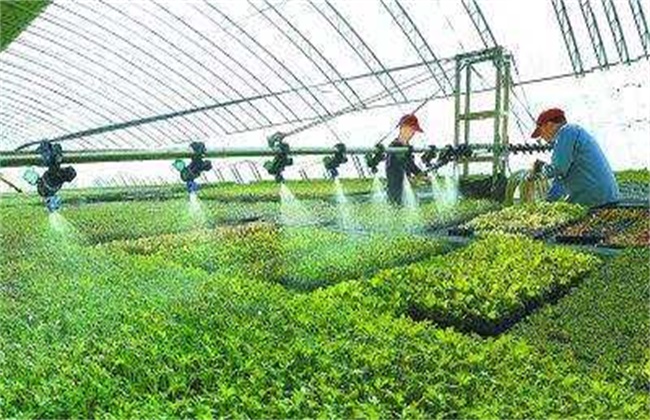
1. Water on sunny days, not on cloudy days
This means watering on sunny days and not watering on cloudy days. The specific watering time should be chosen according to climate changes, and the principle of strictly watering on sunny days, watering less or not at all on cloudy days, and avoiding watering on rainy and snowy days should be followed. Especially during cold waves and cloudy snowy days, watering should be avoided as much as possible during these periods, so as not to cause a drop in ground temperature that leads to root rot and plant death, or cause increased air humidity in the greenhouse, resulting in the occurrence and spread of diseases.
2. Water lightly, not heavily
Winter temperatures are relatively low, and vegetables need less water, so watering frequency should be low and the amount of water should be small; flood irrigation is not suitable. Generally, small amounts of water are applied in alternate rows, and the watering amount is at most only about half of that in summer. This can reduce the impact of watering on low temperatures and ensure the growth and development of crop roots.
3. Water with warm water, not cold water
Winter temperatures are low. If cold water is used for irrigation, it will cause the ground temperature to drop, which is extremely unfavorable to crop growth. Therefore, irrigation water should first be preheated in the greenhouse, and watering should be done when the water temperature is close to the ground temperature. The water temperature should preferably not be lower than 12°C. In addition, cold water from rivers, reservoirs and ponds must not be used directly for irrigation. After watering, ventilation openings can be properly closed to allow the temperature to rise above 30°C for 1-3 hours.
4. Water under the film, not in the open
For winter greenhouse vegetables, drip irrigation under the film or micro-irrigation under the film should be consistently adopted. Only in this way can ground water evaporation be effectively prevented, the air humidity in the greenhouse be reduced, and diseases be prevented. Moreover, the use of micro-irrigation under the film can coordinate the water, fertilizer, air and heat needed for vegetable growth. Especially when used in the early and middle stages, micro-irrigation helps promote root growth and control vine growth, control air humidity in the greenhouse, and reduce the occurrence of pests and diseases. At the same time, it can also effectively control the water volume, reduce fertilizer loss, improve soil structure, promote crop growth and development, and improve vegetable quality.
The above is an introduction to the watering principles for winter greenhouse vegetables. We hope it can help you. To learn more related knowledge, please follow us.