What causes cracked roots in daikon radish? Causes and control methods
Daikon radish is a common vegetable in daily life, and during cultivation, cracking of the fleshy root often occurs, also known as cracked root disease. It occurs mostly in the mid-to-late growth stages, and the cracks are mostly longitudinal, relatively deep. After the root cracks, the daikon radish is highly prone to soft rot, causing huge economic losses to protection. So how should cracked roots in daikon radish be controlled? Follow the editor to take a look.
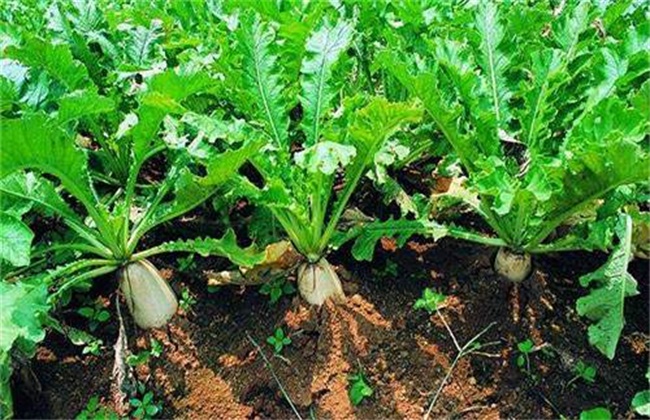
1. Main symptoms
Cracked roots in daikon radish occur mainly in the mid-to-late growth stages, mostly as longitudinal cracks of varying lengths; some crack from the tip of the fleshy root to the middle, and in severe cases the crack starts from the root head and runs through the entire root. Transverse cracking sometimes also occurs, or radial cracking at the root head. After cracking, the fleshy root is highly prone to soft rot and other saprophytic microorganisms, reducing the storage quality and commercial value of the radish.
2. Causes
There are many causes of cracking in the fleshy root of daikon radish, among which insufficient water supply during the growth period is the main cause, because the tissue structure of the fleshy root is huge. The structure of daikon radish is divided from outside to inside into the cortex, phloem, cambium and xylem, and the xylem is the most developed structural layer. In the early growth stage or the early stage of fleshy root expansion, if high temperature and drought occur and water supply is insufficient, the epidermal tissue of the fleshy root will age and harden while the internal cells divide rapidly; in the mid-to-late stage, when the temperature is suitable and water supply is sufficient, the xylem cells will accelerate division and expand again, creating high internal pressure, but the already hardened epidermis cannot continue to grow, so it directly splits the epidermis open.
3. Control methods
The first thing to do is good water management, maintaining a uniform water supply. Water promptly during drought to keep soil moisture content between 65%-80%. Especially during fleshy root expansion, water should be supplied evenly to keep the soil moist. If continuous rainy weather occurs, drain excess water promptly to avoid the soil alternating between dry and wet. Next is rational fertilization: nitrogen fertilizer can be chosen for early topdressing, but nitrogen fertilizer should not continue to be applied later; an appropriate amount of potassium fertilizer or boron and molybdenum elements can be added. Topdressing should follow the principle of small amounts, uniformity, and multiple applications.
The above is an introduction to the causes of cracked roots in daikon radish and control methods. We hope it can help you. To learn more related knowledge, please stay tuned to us.