Detailed explanation of precautions for growing blanched garlic leaves, these points must be mastered
Blanched garlic leaves are one of the more popular vegetables at present, and many people grow them, but some problems are easily overlooked when growing blanched garlic leaves. What problems should generally be noted when growing blanched garlic leaves? Let's learn about the precautions for growing blanched garlic leaves below.
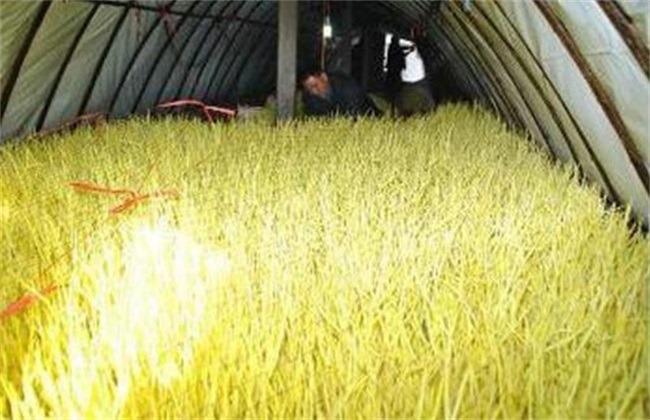
1. Planting time
Only when a good time is chosen can blanched garlic leaves grow vigorously. Generally speaking, planting blanched garlic leaves in autumn is a relatively suitable time; the natural environment in this period is relatively most suitable for their growth, and blanched garlic leaves will also grow relatively fast. As for the specific time, it is roughly around August-September. Although they can also be planted at other times, basically greenhouse management is used, the blanched garlic leaves grown are relatively not as good as those planted in autumn, and more effort is needed.
2. Temperature
Temperature has a great influence on blanched garlic leaves, but many growers always easily overlook this aspect of temperature control. Blanched garlic leaves can grow at around 10-30°C, but the speed difference is extremely great. The temperature at the sprout stage is generally controlled at around 22-26°C as much as possible, and the growth speed will be the fastest this way. As blanched garlic leaves grow, the temperature should slowly be lowered. During the growth and development period, the temperature is best controlled at around 20°C, and when they are about to mature, the temperature should also appropriately drop by about 2-3°C.
3. Sunlight
Blanched garlic leaves generally grow in a dark environment without light, so the control of light brightness must also be done properly. Generally, shading treatment is first carried out outdoors, and then light-blocking treatment is carried out. It is recommended to adopt a double-layer light-blocking form. Indoors, it is enough to rely on lights, which are turned on when management is needed and are usually turned off. Blanched garlic leaves with too much light generally grow relatively tough and are not suitable for sale. This is a point everyone should pay special attention to.
4. Moisture
Whether blanched garlic leaves grow well or not, control of moisture is very important, so moisture is also one of the key points to note. The growth cycle of blanched garlic leaves is very fast, so the demand for moisture is relatively large. The main thing is to maintain the moisture of the soil, but it must not be too moist, because due to the lack of light, too much water can extremely easily cause blanched garlic leaves to rot. Basically keep watering once every 3-4 days, and mainly adjust the watering time appropriately according to the degree of dryness and wetness of the soil.
The above are some precautions for growing blanched garlic leaves, and these are also aspects that everyone does not pay much attention to. Blanched garlic leaves themselves are relatively tender, and coupled with fast growth, some small problems are easily magnified, so more attention should be paid.