What are the common pruning methods for tomatoes?
During the growing process of tomatoes, different treatments need to be applied to the branches to deal with different situations. Some are done to keep high-quality seedlings, and some are done to improve quality, so the pruning methods also differ from one another. Below, let us learn about the more common pruning methods.
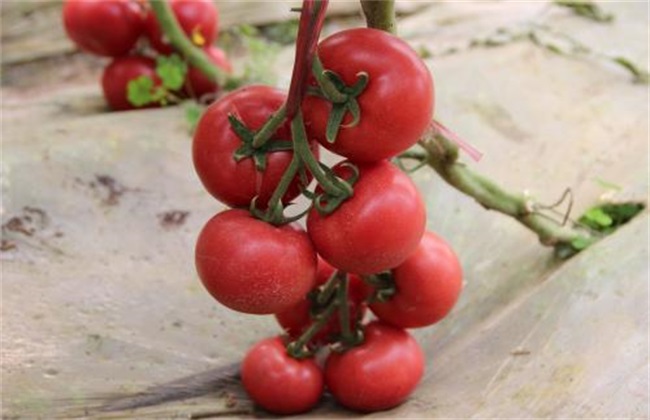
1. Single-stem pruning
Its principle is to keep only the main stem and remove all the other branches, concentrating all the nutrients so that the fruit on the main stem can ripen quickly, with only a few trusses of fruit kept on each branch. If farmers want to seize the market window, they can consider this method. Some farmers who aim to cultivate high-quality seedlings will also choose this method, because this kind of pruning results in fewer fruit, but higher quality, and the quality of the seeds kept is also relatively higher.
2. Multi-truss single-stem pruning
When pruning, several high-quality stems are kept, the other weak branches are removed, and on each branch the well-developed trusses of fruit are kept while the others are also removed. Its main purpose is to cultivate a batch of tomatoes with good growth, reduce the number of weak tomatoes, and allow nutrients to produce the maximum benefit. Growers who want to build up their own brand or who plan to compete on quality will basically consider this, and secondly many greenhouse growers will also consider it.
3. Double-stem pruning
The difference between this and single-stem pruning is that it keeps one more branch. Only two branches are reserved for the whole plant, so while the fruit trusses on the first branch ripen quickly, the excess nutrients are not wasted and can be supplied to the fruit trusses on the second branch for their growth. This is generally more suitable in places with fertile soil, or some varieties with relatively high yields are also suitable. However, when pruning in this way, attention should be paid to removing some old leaves to avoid increasing nutrient consumption.
4. Continuous head-changing pruning
The principle is actually very simple: prune the branches with poor growth. Whether it is the main stem or other branches, if the growth is poor, prune them off directly. Then, after the subsequent side branches grow out, observe their growth and prune the weak stems. Its purpose is to always maintain high yield and high quality of the plant and to maximize the use of the plant's nutrients. Some farmers who pursue yield can consider this method.
The above are the common pruning methods for tomatoes. The groups using these methods will differ somewhat, and everyone can adjust according to their own needs. Pruning is something that must be done, so do not be reluctant to do it; the yield after pruning is generally more ideal.