Detailed explanation of tomato pruning methods, easy to learn at a glance
Tomatoes are very common in our daily lives and are a food that many people really enjoy eating. They are now grown in all parts of our country, and when growing tomatoes, we need to do a good job of pruning. Tomato pruning can avoid excessive nutrient consumption, improve air and light penetration and increase yield. So how exactly should tomatoes be pruned? Today the editor brings you the tomato pruning methods, so let's take a look below!
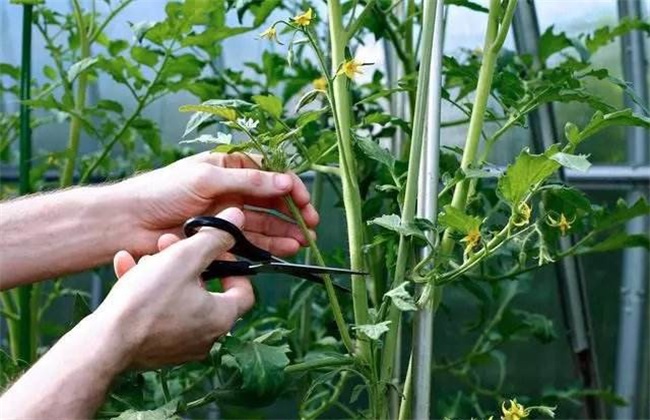
1. Single-stem pruning method
When growing tomatoes, if it is dense planting cultivation, then the single-stem pruning method is suitable. The single-stem pruning method can promote tomatoes to mature early as soon as possible, and it is also relatively simple to carry out, but the number of seedlings used is relatively large. When carrying out single-stem pruning, each tomato plant only needs to keep one main stem. Remove all side branches, then in planting production, keep about 5-10 fruit clusters on the main stem.
2. Double-stem pruning method
The double-stem pruning method requires one more step than single-stem pruning: in addition to keeping the plant's main stem, attention must also be paid to selecting and keeping one side branch, cultivating it into a second main stem, and encouraging it to become a fruiting branch. Then remove the excess side branches as well as the regenerated branches on the two stems. Double-stem pruning is suitable for fields planted relatively sparsely, and it is also relatively simple to carry out, and the number of seedlings used is not large. In production, generally about 5 fruit clusters are kept on each main stem before pinching.
3. Single-stem stem-changing pruning
The single-stem stem-changing pruning method is also based on the single-stem pruning method. When the number of fruit clusters on the main stem reaches about 5, the pinching work should be done well. Then, when the fruit at the top begins to swell, choose and keep one side branch near the upper part of the plant and let it continue to grow. And it should also be pinched when it grows 5 fruit clusters. This operation can speed up fruit swelling and avoid excessive vegetative growth in the plant.
4. Continuous pinching
Continuous pinching is also mainly based on single-stem pruning. When the fruit has set about 3 fruit clusters, you can begin topping and pinching the main stem. The main stem should be twisted to one side and allowed to grow drooping, then another side branch should be selected and kept below the main stem and cultivated as the main stem. When the second main stem has set 3 fruit clusters, repeat the previous work, and continue in this way afterward. This achieves the goal of fruiting in layers, and it is also suitable for sparsely planted plots. It can increase early yield and prevent excessive vegetative growth, but it requires a certain level of operational skill and is also rather troublesome.
The above is a brief introduction to tomato pruning methods. In addition to the above pruning methods, there are also multi-head pruning methods, removing axillary buds, pinching and leaf removal, etc., and everyone needs to pay more attention to them. That is all for today's introduction. This article is for reference only, and I hope it can help everyone!