What are the key management points for winter cultivation of oyster mushrooms?
Oyster mushrooms are one of the common edible fungi in daily life. Autumn and winter are the fruiting production seasons for oyster mushrooms, and how well they are managed during this time directly affects their yield, quality and returns. So how should cultivation be managed at this time? Let's take a look at the key management points for winter cultivation of oyster mushrooms.
1. Light should be strong rather than weak
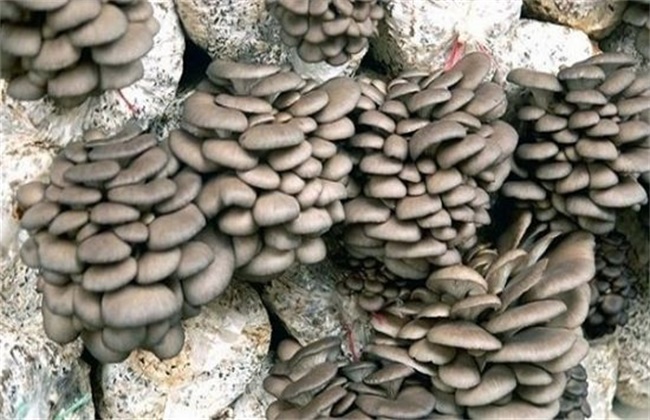
Light is an important way to raise the shed temperature in winter, and also an important means of increasing yield and improving the quality of the fruiting bodies. The light intensity and duration should be determined according to the insulation conditions of the shed and climate changes. If the shed has good insulation performance and the nighttime temperature can be maintained above 5 degrees, then the straw mats can be uncovered early and covered late, extending the daytime light duration as much as possible; otherwise, the daytime light duration should be shortened. Light intensity directly affects the yield and quality of oyster mushrooms. In a mushroom shed with stronger light, the oyster mushroom fruiting bodies are darker in color, the caps are thicker, the mushroom caps have better toughness, and the yield can also increase by about 20%.
2. Water should be applied sparingly rather than plentifully
In winter, temperatures are low, evaporation from the ground and the growing substrate in the shed is low, the respiration of the mycelium is reduced, and the water consumed is correspondingly reduced. In addition, winter focuses on heat preservation, and the shed is often kept closed, so water vapor is difficult to release. Therefore, in winter the shed should be sprayed with less water, not too much. For mushroom sheds that are relatively large, have fewer mushroom logs placed, or have good ventilation and are relatively easy to warm up, spraying once every 1-2 days is generally appropriate; otherwise, spray once every 3-4 days. Spraying should also not be done with the shed closed, as this will cause the caps to curl upward, or even wither and die, causing physiological diseases.
3. Ventilation should be frequent rather than strong
Ventilation and air exchange can increase the oxygen content in the shed, but at the same time cold air will also enter the shed and lower the shed temperature, so in winter, while ensuring that the oxygen in the shed is sufficient, the ventilation time should be reduced as much as possible. Mushroom sheds with good ventilation conditions should use short periods of light ventilation for air exchange, that is, ventilate 3-4 times a day for 30 minutes each time; otherwise, ventilate 8-10 times, for 20 minutes each time.
4. Heating should be cheap rather than extravagant
Temperature is an important factor affecting the formation and normal growth of young oyster mushroom buds in winter. If the shed temperature is too low or the temperature difference is too small, mushroom buds are difficult to form. After budding, if the shed temperature is too low, the fruiting bodies basically stop growing and will not differentiate; even if they differentiate in time, deformed mushrooms will form, with low commercial value. Therefore, after the mushroom buds form, appropriate heating is needed, and the shed temperature should be kept above 5 degrees to facilitate heat preservation and widen the temperature difference, promoting the formation of mushroom buds. After budding, the shed temperature should be controlled at around 8°C to ensure normal growth of the fruiting bodies.
The above is an introduction to the key management points for winter cultivation of oyster mushrooms. We hope it can help you. To learn more related knowledge, please keep following us.