What are the reasons for sunflower yield reduction?
The sunflower is not only a highly ornamental flowering plant, but also one of the main oilseed and grain crops in our country. Its seeds, which are the sunflower seeds commonly seen in our daily lives, are very popular in our country and are grown over a large area. However, many people tend to experience yield reduction when growing sunflowers. So what are the reasons for sunflower yield reduction? Below, the editor will give a brief introduction for everyone. Let's take a look together!
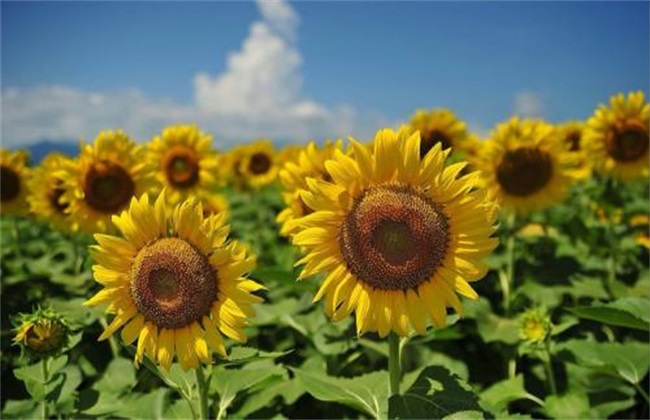
1. Drought
Although the sunflower is a crop with relatively strong drought resistance, this does not mean that sunflowers need little water during growth. On the contrary, the sunflower is a crop with a relatively high water requirement. According to surveys, for every 1 kg or so of dry matter produced by sunflowers, the water requirement reaches about 500 kg. From the bud stage until the end of flowering, sunflowers are in their period of greatest water demand. Throughout the entire growth period of the sunflower, the water demand during this period accounts for about 60%. If water is lacking during this period, it will cause poor pollination and abortion in sunflowers, thereby reducing yield.
2. Improper management
When growing sunflowers, management work is very important, and poor management is also one of the main reasons leading to sunflower yield reduction. However, management problems mainly occur among some small-scale growers. For many small-scale growers, they only take charge of sowing and harvesting when growing sunflowers. Basic management work such as water and fertilizer management and pest and disease control is not done properly. Especially during the key growth periods of sunflowers, a lack of water and fertilizer will seriously hinder the growth of sunflowers, increase the rate of empty and shriveled seeds, and reduce yield.
3. Poor pollination
The male and female flowers of sunflowers are located in different positions, and under normal circumstances the stamens mature earlier than the pistils. Therefore, the male and female flowers of sunflowers have incompatibility, and self-pollination failure is likely to occur. In addition, the sunflower is a cross-pollinated crop, and pollination is mainly carried out by insects. Therefore, if pollinators are lacking, the pollination and seed-setting rate of sunflowers will be reduced, and yield will decline as a result. Moreover, in recent years, the unrestricted use of chemical pesticides has led to a decline in insect numbers. If artificial pollination work is not done well, then the pollination rate of sunflowers will be very low.
4. Environmental impact
After sunflowers enter the flowering and pollination period, if they encounter rainy days, the flowering period will be delayed, resulting in poor flower quality and a small number of flowers. The maturation time of the stamens and pistils will also be delayed as a result. And if they encounter high-temperature and drought weather, then the flowering period of sunflowers will be advanced, resulting in insufficient pollen and the inability to carry out normal pollination and fertilization. Moreover, during rainy days, major pollinating insects such as bees will also stop their activities, affecting the pollination of sunflowers.
The above is a brief introduction to the causes of sunflower yield reduction. That is all for today's introduction. This article is for reference only, and I hope it can help everyone!