How to manage cotton during the flowering and boll-setting stage? Key technical points explained in detail
Cotton has a relatively large planting area in China. When growing cotton, management work is very important. We should appropriately adjust management methods according to the growth stage of cotton to ensure that cotton can grow normally at every growth stage. Among these, management during the flowering and boll-setting stage is especially important, as it directly affects the yield and quality of cotton. So how should cotton be managed during the flowering and boll-setting stage? Now let's take a look together with the editor!
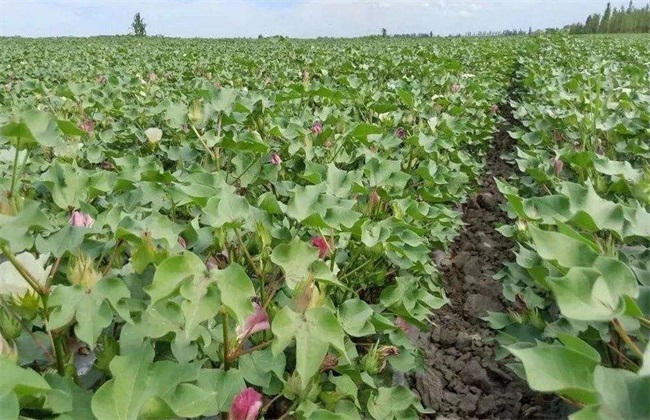
1. Reasonable fertilization
During the flowering and boll-setting stage, the application of flowering and boll-setting fertilizer is very important. If the soil fertility is high, the soil moisture is good, and the cotton plants are robust, then it can be applied in combination with chemical regulation work. Generally, applying 12 kg of urea and about 8 kg of potassium sulfate per mu is sufficient. If both soil fertility and soil moisture are relatively poor, then the flowering and boll-setting fertilizer should be applied early and heavily. However, when applying flowering and boll-setting fertilizer, we should also control the amount and timing of fertilization according to the growth condition of the cotton plants. If the daily growth amount exceeds 3 cm, then not only should the application time of the flowering and boll-setting fertilizer be delayed, but the amount of nitrogen fertilizer should also be reduced. The fertilization method should mainly be hole application and strip application, with good control of depth and position.
2. Timely watering
After cotton enters the flowering and boll-setting stage, its leaf area will reach the largest of the entire growth period. Moreover, this period is generally in the high-temperature season, so this is the time when water evaporates fastest. Cotton plants are very sensitive to water. If there is insufficient water, it will hinder the metabolism of cotton, cause a large number of buds and bolls to drop, and make premature senescence very likely to occur. Therefore, if the cotton flowering and boll-setting stage encounters drought and there is no rain, it should be watered in time. This can not only meet the water needs of the cotton plants, but also promote the decomposition of fertilizer and absorption by the roots, achieving the goal of promoting aboveground growth and controlling belowground growth.
3. Intertillage and hilling
When cotton fields are undergoing work such as pruning and pest control, soil compaction may occur. This reduces soil permeability and leads to premature root senescence. Therefore, before cotton rows close, we should promptly break up soil compaction and do a good job of intertillage and shallow hoeing. However, it should be noted that because the root regeneration ability of cotton is not strong during the flowering and boll-setting stage, the intertillage depth should not be too deep. Then, during intertillage, hilling work can be carried out together with it. This can not only prevent plant lodging, but also improve permeability.
4. Pruning and topping
Pruning work is also indispensable during the cotton flowering and boll-setting stage, and it is also a main measure for improving the permeability of the cotton field and preserving bolls. When pruning and topping, the main task is to remove one leaf and one bud. Removing the side buds can inhibit the top growth of fruiting branches, prevent excessive horizontal growth of cotton plants, and improve their permeability. This concentrates nutrients on the fruiting branches and increases single boll weight. When removing side buds, the number of fruiting nodes retained on each fruiting branch should be properly controlled according to the actual situation, usually kept at about 3. For redundant buds and rampant branches growing from the main stem and fruiting branch leaves of the plant, they should be removed in time to avoid the cotton field becoming too dense and closed.
The above is a brief introduction to how to manage cotton during the flowering and boll-setting stage. That is all for today's introduction. This article is for reference only, and I hope it can help everyone!