Key Management Techniques for Chinese Chives Before and After Winter Framing
When cultivating Chinese chives in winter, because temperatures are relatively low, frames must be covered to keep them warm so the chives can grow normally. Management before and after framing is also quite important, as it directly affects the growth and yield of the chives. So how should Chinese chives be managed before and after framing? Let's take a look.
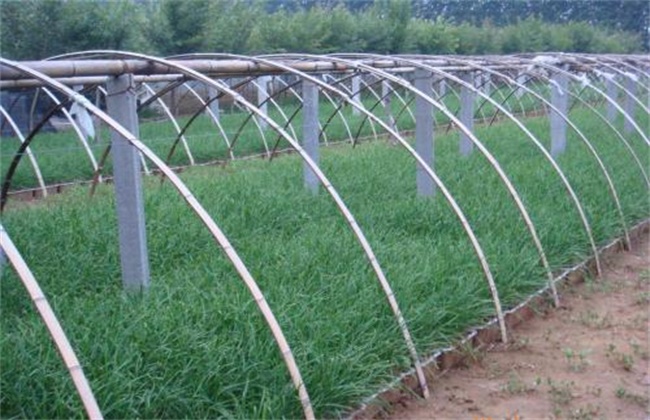
I. Management Before Framing
1. Framing Time
Framing time is relatively important. If framing is done too early, the chives grow rapidly and are extremely susceptible, affecting the final yield; but if framing is done too late, the chives will enter a passive dormancy period, causing slow growth. Therefore, framing time should be determined according to the chives returning to root and the expected market time, and is generally carried out in mid-to-late November.
2. Preparation Before Framing
Before framing, be sure to clean up the aboveground fruits, weeds and dead leaves, and also sweep away any snow to avoid melted snow flowing into the beds, reducing pathogen latent stress resistance and lowering the degree of disease incidence.
II. Management After Framing
1. Temperature Management
In the initial period after framing, the temperature should not be too high and should rise gradually. You can increase soil temperature and the height of the pseudostem through intertillage and hilling. During the day, the temperature should be controlled between 18-26 degrees, and at night between 8-10 degrees, and must not be lower than 5 degrees.
2. Humidity Management
Timely ventilation and air exchange is one of the important measures for regulating the temperature and humidity inside the shed, expelling harmful gases, and promoting the growth of Chinese chives. It can also improve the quality of the chives and reduce disease occurrence. Appropriate ventilation is needed 4-5 days before harvesting the first crop of chives, and after harvest the shed should be closed to raise the temperature, which is beneficial for wound healing.
3. Fertilizer and Water Management
Fertilizer and water are the material foundation for the growth of Chinese chives. Generally, before framing, fertilizer should be applied together with irrigation water; after framing, before the second crop, no watering or fertilizing is needed. If fertilizer and water were insufficient before framing, then the plants will grow weakly, and when harvesting the first crop, appropriate watering and fertilizing can be done, applying quick-acting nitrogen fertilizer at 20—30 jin/mu with the water.
4. Pest and Disease Control
After framing, the main pest is the chive maggot, which can be controlled by the traditional method of irrigating organophosphorus pesticides when watering, or by spraying cyromazine after the shed is framed and the soil thaws. The main diseases are gray mold and phytophthora blight. For eggplant gray mold, 50% iprodione suspension concentrate at 600 times dilution, or 40% pyrimethanil at 600 times dilution can be sprayed for control, while for phytophthora blight, 600 times dilution of Infinito or 800 times dilution of Ridomil Gold MZ can be used for control.
The above is an introduction to the management techniques for Chinese chives before and after winter framing. We hope it can help you. To learn more related knowledge, please stay tuned to us.