Causes and Control Methods of Leggy Cucumber Seedlings
During the cucumber seedling-raising process, after the seedlings emerge, attention should be paid to hardening the seedlings. The seedbed needs to maintain humidity, and watering should not be excessive. At the same time, ventilation conditions should be strengthened to prevent the seedlings from growing excessively and forming leggy seedlings. So how should leggy cucumber seedlings be controlled? Let's take a look together.
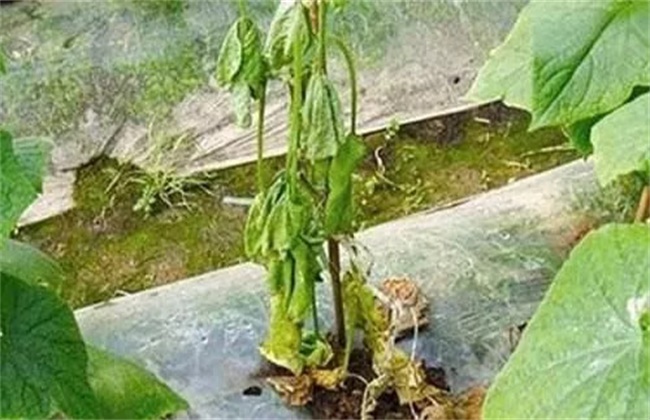
1. Symptoms
Leggy seedlings have large leaves, thin leaves, a lighter color, thin and long stems, and large internode spacing. When the root system is dug up, the roots are found to be short and small, with little dry matter accumulation. Because the root system is weak, its ability to absorb fertilizer and water is weak. The stems and leaves are tender, and the cuticle on the surface is not well developed. Once air humidity decreases, transpiration intensifies, and the leaves will wilt. Leggy seedlings have poor stress resistance and are highly susceptible to freezing and disease infection. Because of nutritional deficiency, leggy seedlings form flower buds slowly, with fewer and later flowers, often forming deformed fruit, prone to flower drop, and low yield.
2. Causes
The main causes of leggy seedling formation are nighttime temperature being too low, small day-night temperature difference, insufficient light, poor ventilation, excessive moisture, excessive application of nitrogen fertilizer, and too little application of phosphorus and potassium fertilizer. When the seedlings have just emerged, because ventilation conditions are poor and ventilation is not carried out in time, contact with the covering material will cause excessive seedling growth. At this time, the seedlings are more sensitive to temperature, and under high temperature conditions the hypocotyl is very likely to elongate. In addition, before planting, the outside temperature gradually rises, the weather becomes warmer, and the seedlings grow faster. At this time, the plants crowd each other and shade each other, causing leggy seedlings.
3. Control Methods
First, when building the seedbed, the proportion of nutrient soil should be reasonable. It can be prepared by mixing organic fertilizer and garden soil. The organic fertilizer must be fully decomposed, and the garden soil must not be chosen from soil where cucurbit vegetables have been planted, so as to avoid infection by pests and diseases. At the same time, it should be sifted. After the seedlings emerge, the humidity of the seedbed and the nighttime temperature should be controlled. Generally, keep it between 15-20 degrees in the first half of the night, and keep it at 10-15 degrees in the second half of the night. In the morning it must not be lower than 5 degrees, maintaining a certain day-night temperature difference. When the seedlings show excessive growth, they can be sprayed with 50% chlormequat 2500-3000 times dilution. After 10 days of spraying, the seedlings will be found to grow slowly, the leaf color will become darker green, and the stems will become sturdy.
The above is an introduction to the causes and control methods of leggy cucumber seedlings. We hope it can help you. To learn more related knowledge, please stay tuned to us.