What are the factors affecting cotton fiber quality?
Cotton is the main raw material for the textile industry, and its fiber quality directly affects the quality of textiles, so cotton quality has also become a key element of raw cotton competitiveness. So what factors affect cotton fiber quality? Let's take a look together.
1. Genetic characteristics of the variety
Cotton fiber quality depends to a large extent on the genetic characteristics of the variety. At present, the fiber length of many cotton varieties grown is generally 29mm, and their fiber strength and fineness are relatively poor, far from meeting the requirements for high-quality cotton, and the adaptability and yield stability of the varieties are also relatively poor. The fiber quality of these cottons can currently only maintain the status quo, far from meeting the demand of production and the market for high-quality cotton.
2. Improper cultivation management
In order to pursue quality, many farmers blindly adopt the “short, dense, early” planting model, which leads to strong vegetative growth of cotton, causing field closure, intensified pests and diseases, and an increase in the number of rotten bolls. In addition, fertilization is too single, mainly chemical fertilizers, with more fertilizer applied early, and it is very easy for fertilizer deficiency and premature aging to occur later. When preventing and controlling pests and diseases, there is a lot of blindness in the pesticides used, and several pesticides are often mixed, causing damage to cotton quality. In addition, the use of foliar fertilizers and growth regulators is unreasonable, and 2 or more kinds are often mixed, only causing leaves to become fat and leaf color to become dark green to black green, with excessive vegetative growth, causing bud and boll formation to be late, the maturity period to be delayed, and fiber development to be poor.
3. Climate and environmental changes
Cotton fiber develops from the epidermal cells of the ovule. Within 20 days after flowering is the main elongation period of the fiber, and after 25 days elongation basically stops. The elongation and development of cotton fiber are closely related to temperature. The suitable elongation temperature is between 20-25 degrees, and below 15 degrees or above 25 degrees will cause the fiber to stop elongating. If the daytime temperature is too high and the nighttime temperature is too low, cotton fiber elongation is inhibited, making it difficult to reach the length under suitable temperature, causing a serious decline in quality.
4. Problems in harvesting
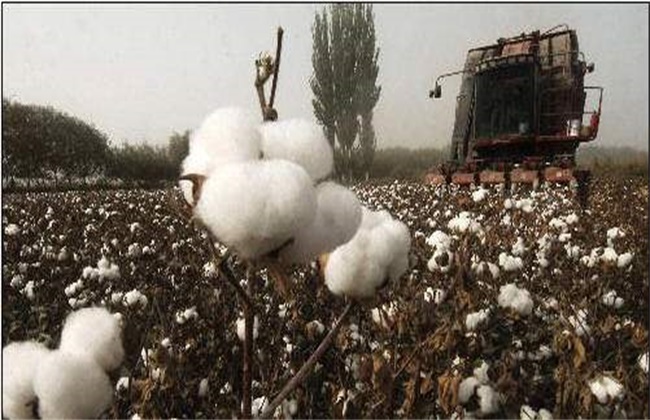
At harvest, different varieties are mixed and harvested together, and in trading there is also the phenomenon of passing off inferior goods as good ones, which causes cotton variety instability. In addition, as the area of continued harvesting continues to expand, it also has a certain impact on cotton varieties. During mechanical harvesting, in order to carry out timely mechanical harvesting, defoliants must be used in early September. For varieties with too long a growth period, after using defoliants, the fiber cannot mature naturally and normally, causing a certain impact on cotton fiber quality.
The above is an introduction to what factors affect cotton fiber quality. We hope it can help you. If you want to learn more related knowledge, please stay tuned to us.