How to Water and Fertilize Spinach? Detailed Key Points of Water and Fertilizer Management
Spinach, also called Persian spinach, parrot spinach, etc., is an annual herbaceous plant of the Chenopodiaceae family. It is an extremely common vegetable in our country. Spinach has high nutritional value and can be both eaten and used medicinally to a certain extent. Therefore, spinach cultivation is now extremely common, and when growing spinach, watering and fertilizing are very important tasks. Today, the editor brings you the key points of spinach water and fertilizer management. Let's take a look below!
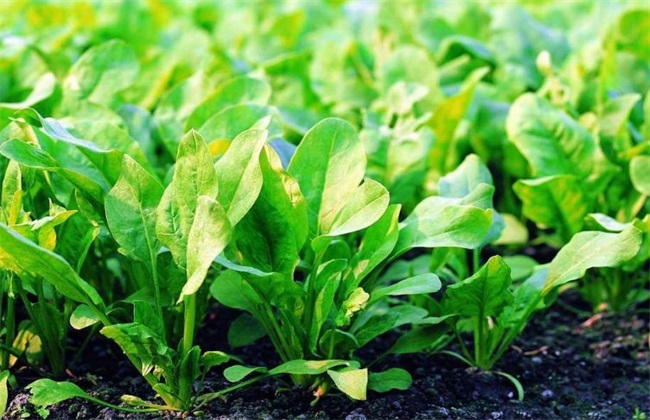
1. Key Points of Watering
Spinach has a very well-developed root system and generally prefers to grow in soil rich in humus with a pH of around 6.5. However, spinach has relatively poor waterlogging tolerance, and soil moisture should be kept at around 20%; exceeding this can easily cause spinach root rot and death. In the early growth stage of spinach, the water requirement is not large, but to ensure full and strong seedlings, sufficient water should still be applied before sowing. After sowing and before emergence, watering can be omitted. During the period from spinach seed germination to the growth of 3 leaves, the amount of watering should also be controlled to avoid diseases such as damping-off.
After entering the middle and late growth stages of spinach, the water requirement of spinach increases. During this period, it should be watered about 4 times to keep the soil in a moist state. Then, when planting overwintering spinach, sufficient antifreeze water should be applied. When entering the high-temperature summer season, watering should avoid noon and be done in the morning and evening, so as to lower the temperature and promote seedling growth. Also, after each fertilization, water once. Finally, before harvest, to ensure the quality of spinach, watering should be stopped to avoid excessive humidity causing diseases.
2. Application of Base Fertilizer
Spring spinach is sown relatively early, so land preparation and fertilization can be carried out in the previous year. The base fertilizer is mainly decomposed farmyard manure, applied at about 4500 kg per mu, then the soil is deep-ploughed to about 22 cm, and the soil is raked level to make beds. Then, when the early spring soil thaws to about 8 cm, sowing can begin. The fertilizer type and amount for autumn spinach are similar to those for spring spinach, mainly using high beds or flat beds. For overwintering spinach, choose soil with sufficient fertility, deep soil layers, and good fertilizer and water retention. Compared with other seasons, the amount of base fertilizer should be appropriately increased, and the soil should be deep-ploughed so that the soil and fertilizer are fully mixed to promote seedling emergence.
3. Topdressing Methods
In the early growth stage of spring spinach, topdressing may not be needed. By the middle and late stages, the demand of spinach for fertilizer and water increases, so fertilizers such as ammonium sulfate can be appropriately applied as topdressing, with the amount controlled at about 40 jin. The growth period of spring spinach is not long, and ensuring sufficient nitrogen fertilizer can effectively enhance leaf growth capacity and delay the bolting period of spinach. When autumn spinach grows to 5 true leaves, quick-acting nitrogen fertilizer should be applied about 3 times, such as ammonium sulfate, urea, etc. The growth period of overwintering spinach is relatively long, so topdressing should be applied about 3 times in three periods: before winter, during overwintering, and in early spring, with fertilizers also mainly including ammonium sulfate and farmyard manure.
The above is a brief introduction to the key points of spinach water and fertilizer management. That is all for today's introduction. This article is for reference only, and I hope it can help everyone!