What to Do About Poor Coloring of Tomatoes in Winter? Causes and Solutions
After winter arrives, temperatures are relatively low, and for farmers growing tomatoes in greenhouses, how to promote normal color change of tomato fruit in a short time has become one of the difficult problems. So what causes poor coloring of tomatoes in winter? And how should it be solved? Let's take a look together.
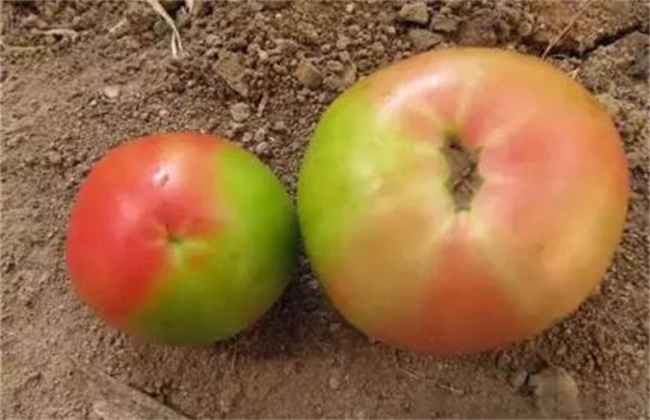
I. Causes of Poor Coloring
1. Unsuitable temperature
Unsuitable temperature is the main cause of poor coloring in tomatoes. After tomatoes enter the mature green stage, their chlorophyll content is relatively high while carotenoids are low. Lycopene is readily formed at temperatures between 18-26 degrees, but when the temperature drops to 13-14 degrees, lycopene cannot form normally, while carotenoids still form, so under low-temperature conditions the fruit turns yellow and pale. In addition, when the temperature is higher than 32 degrees, the fruit ripens faster, but lycopene formation is also blocked, which likewise affects normal coloring.
2. Improper fertilizer and water management
When too much nitrogen fertilizer is applied, the plant grows vigorously, but insufficient water can also cause poor coloring of the fruit; when a certain element is lacking, different parts of the fruit may also show poor coloring, for example, when nitrogen is deficient, the fruit shoulder turns yellow, and when potassium is deficient, the fruit shoulder turns yellow-green.
3. Poor ventilation and air permeability
When the ventilation and air permeability of the greenhouse are poor, it can also affect the normal coloring of the fruit. Tomatoes grown in greenhouses with insufficient light are also less brightly colored than those grown in open fields.
II. Solutions
1. Strengthen insulation measures
Temperature is an important factor in ensuring good coloring of tomatoes, so in winter the greenhouse temperature must be well controlled, keeping it between 18-26 degrees, so that tomatoes can change color normally.
2. Supplement light
In winter, straw mats should be uncovered as early as possible and covered as late as possible, to extend the time tomatoes receive light as much as possible. After rain and snow stop, while ensuring the temperature does not drop, the straw mats should be uncovered in time so that the vegetables get more light. A reflective screen can also be set up at the greenhouse wall to increase light.
3. Apply supplementary potassium and boron fertilizer
Potassium fertilizer can help tomato coloring, but it should be applied sufficiently in advance, because potassium fertilizer takes effect relatively slowly after application. If it is applied during the tomato coloring stage, it often has no effect by then.
The above is an introduction to the causes of and solutions for poor coloring of tomatoes in winter. We hope it can help you. To learn more related knowledge, please stay tuned to us.