When to Harvest Napa Cabbage? An Analysis of the Best Harvest Time
As a vegetable, napa cabbage is very common on people's dining tables. It contains very rich nutrients and is welcomed by many people. There are now very many varieties of napa cabbage, and different varieties have different planting and harvest times. Among them, the common ones are summer napa cabbage and autumn napa cabbage. So after planting napa cabbage, when should it be harvested? Below, the editor will briefly introduce it for everyone. Let's take a look together!
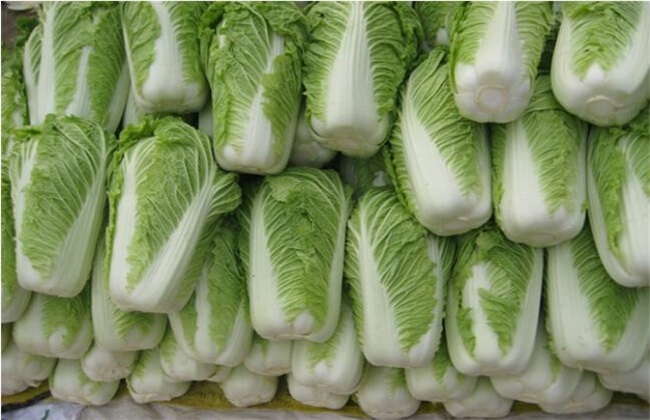
1. Harvest standards
When harvesting napa cabbage, timing is very important. If napa cabbage is harvested too early, not only will the yield decrease as a result, but the quality of nutrients such as sugars in the napa cabbage will also be low, and its storage tolerance will be poor. According to professional survey data, in mid-November, if harvesting is delayed by one day, the average yield can increase by about 700 jin/mu. Therefore, napa cabbage can be harvested appropriately later, but harvesting should not be too late either, otherwise the napa cabbage is prone to frost damage. At the latest, all of it must be harvested when the temperature drops to minus three degrees.
2. Harvest time for summer napa cabbage
Summer napa cabbage is generally the most standard planted variety. Whether sowing or harvesting, the temperature during that period is relatively suitable for the growth of napa cabbage. Therefore, the sowing period is also relatively longer, and the sowing time can also be appropriately changed. When planting summer napa cabbage, the main purpose is to satisfy the market and meet consumers' demand for napa cabbage. Therefore, summer napa cabbage is generally sown from May to June, and the harvest time is from July to August. However, the appropriate planting time and sowing period should also be selected according to the characteristics of the planted variety.
3. Harvest time for autumn napa cabbage
Compared with summer napa cabbage, the harvest time requirements for autumn napa cabbage are relatively strict. The growth period of autumn napa cabbage is relatively short, and the heading stage is also relatively fast. Moreover, if it is a mid-to-late maturing variety and needs to be stored in winter after harvest, then in the north it should be harvested around the Minor Snow solar term. In mid-November, the weather conditions are relatively good, and at this time it does not need to be harvested, thereby extending the growth period of the napa cabbage and filling out the leaf heads. Napa cabbage that needs winter storage should be harvested in late November to prevent strong cold waves from causing frost damage to the cabbage.
4. Harvest precautions
When harvesting napa cabbage, it is still necessary to harvest at the appropriate time according to the variety. For example, if it is an early-maturing variety, then it generally should be harvested after the leaf heads have formed. If the late autumn market is booming, then it can be harvested and sold before the leaf heads are completely firm. For mid-to-late maturing varieties, the longer the growth period, the more mature the leaf heads will be, and the yield can also increase. So we had best delay the harvest time as much as possible, but it should be noted that napa cabbage can only tolerate light frost. If it encounters a temperature of minus two degrees, frost damage will occur.