Detailed Explanation of Key Points of Greenhouse Winter Lettuce Planting Techniques
Lettuce is a relatively common vegetable in our daily lives, and it has a fairly wide planting area in China. Now, as planting techniques become more and more mature, greenhouse lettuce planting can basically be carried out all year round. And now, as temperatures gradually drop, how should greenhouse lettuce be planted in winter? Below, the editor brings you the planting techniques for greenhouse winter lettuce. Let's take a look!
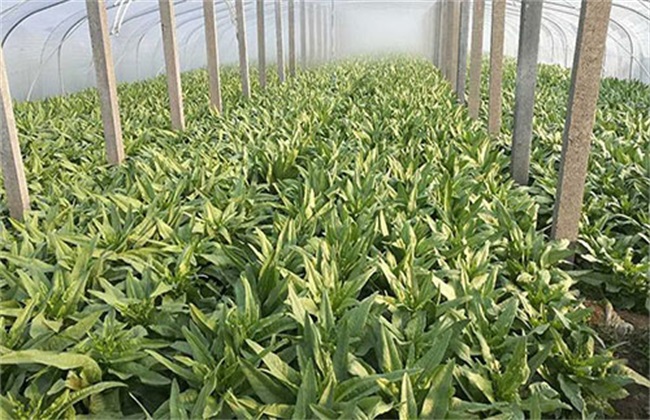
1. Garden plot selection
The root system of lettuce is relatively weak, so its nutrient absorption capacity is not very strong either. Lettuce is not suitable for growing in a high-humidity environment. If it stays in a high-humidity environment for a long time, it is prone to downy mildew, sclerotinia rot, and other diseases, which will have a great impact on the growth of lettuce. In addition, lettuce has relatively high oxygen requirements during growth. Therefore, the garden plot for winter lettuce should be established on soil with high terrain, normal drainage and irrigation, and rich humus content, preferably mainly sandy loam soil, and the soil must also be ensured to have strong water and fertilizer retention.
2. Variety selection
The selection of winter lettuce varieties is very important, and mid-to-late maturing varieties should be given priority. If early maturing varieties are used, premature bolting is very likely to occur. Therefore, varieties such as Sanqingpi and Jinming No. 1 should be selected. Among them, the time from sowing to harvest for the Sanqingpi variety is generally about three months. Jinming No. 1 is a new variety in recent years, with strong resistance to sclerotinia rot, and its maturity period is generally about three months as well. A suitable variety directly determines whether lettuce can safely overwinter, and it is also the key to whether planting can succeed.
3. Timely sowing
The planting time for winter lettuce is generally around September, and the average daily temperature must not exceed 23°C. Before sowing, we should properly treat the seeds. First wrap the seeds with gauze, then soak them in clean water for about 5 hours. Then take the seeds out and place them in a refrigerator for about two days to promote germination. After sowing, the temperature should be controlled at about 18°C, and attention should be paid to controlling the sowing density, with a seeding rate of about 15 kg per mu. The seedbed should mainly be vegetable garden soil with sufficient fertility. Apply sufficient base fertilizer, then deep plow the soil, water and cover with soil, and then sowing can be carried out.
4. Seedling stage management
After sowing, there is no need to cover with soil; just gently stir the surface soil. Then cover with a shade net for about three days to provide good shading, and keep the seedbed temperature at about 22°C. When the cotyledons of the seedlings are relatively plump, the shade net can be removed. After emergence, the daytime temperature should be controlled at about 20°C, and the day-night temperature difference should be maintained at 10°C. In addition, pesticides such as chlorothalonil should be sprayed appropriately to do a good job in preventing and controlling pests and diseases of the seedlings. Seedlings generally do not need topdressing. Keeping the leaves of the seedlings on the lighter side is beneficial for reviving after transplanting, but attention should be paid to weed control to avoid weeds affecting the growth of the seedlings.
The above is a brief introduction to greenhouse winter lettuce planting techniques. That is all for today's introduction. This article is for reference only, and I hope it can help everyone!