How to apply overwintering water to wheat? Master the timing and method of irrigation
As temperatures gradually turn cooler, winter wheat has already been sown in most areas by now, and shortly after the winter wheat emerges, farmers will carry out overwintering water irrigation. Many people are curious about what this overwintering water does, so let's learn about it together below.
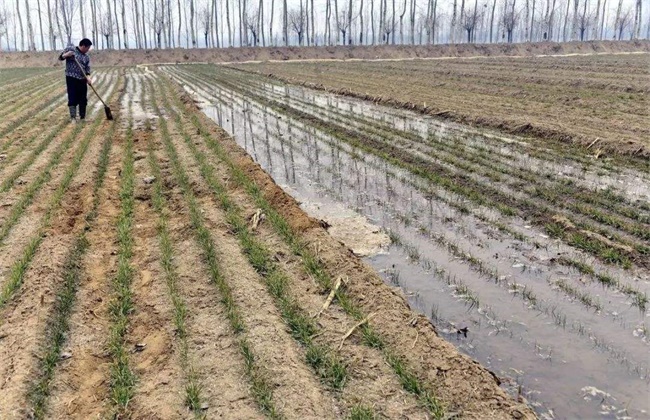
I. The role of applying overwintering water to wheat
1. Applying overwintering water to wheat gives the wheat sufficient moisture during the overwintering period, which is greatly beneficial for tillering before winter and for promoting new tillers, and it can serve the purpose of using winter water in spring and preventing spring drought.
2. Applying overwintering water can also improve the soil's thermal conductivity and reduce the range of temperature fluctuations in the field, so as to prevent winter wheat seedlings from freezing to death due to drastic temperature changes.
3. Overwintering water irrigation can also settle the soil, fill soil cracks, and eliminate overwintering pathogenic bacteria and pests hidden within them, which is conducive to tillering and also reduces the base number of pests and diseases.
4. For saline-alkali land, it can alleviate soil salinization and protect seedlings, and it can also promote microbial activity; together with the decomposition of fertilizer, it can promote wheat growth after green-up.
II. How to irrigate according to temperature
The temperature for applying freezing water to winter wheat is an average daily temperature of about 3°C. If irrigation is too early, the soil tends to harden, and after overwintering the soil moisture is clearly insufficient; if irrigation is too late, water does not easily infiltrate downward, causing the surface to freeze and the wheat seedlings to suffer freezing damage, so timely irrigation is extremely important. According to experiments, if winter irrigation is done at an average daily temperature of 0-1.5°C, the ground will freeze and seedlings will die, while it is most suitable to finish irrigating from when the average temperature drops to 7-8°C until about 3°C.
III. Precautions
Applying freezing water to wheat depends on the weather, the soil and the seedlings. First, irrigation has the best effect in years with scarce autumn rain and cold, dry winters, and it is best carried out when the average daily temperature is stable at about 3°C. If too early, the temperature is rather high, evaporation is large, it cannot play the role of storing water and preserving soil moisture, and it can also cause excessive vegetative growth of wheat seedlings; if too late, the temperature is rather low, which can cause water to accumulate and freeze on the ground surface. When soil moisture is insufficient and ground temperature is rather low, flood irrigation is not suitable, otherwise it will cause wheat seedlings to turn red, turn yellow, or even die. Early-sown wheat with vigorous seedlings generally has better subsoil moisture, so irrigation can be delayed or omitted. To prevent flood irrigation from causing scouring, pressing and silt burying that harm wheat seedlings, after irrigation, hoe and loosen the soil to prevent hardening and cracking that lets air through and injures roots and kills seedlings.
The above is an introduction to how to properly apply overwintering water to wheat. We hope it can help you. To learn more related knowledge, please stay tuned to us.