What are the prevention and control measures for low-temperature freeze damage in Chinese cabbage?
After Frost's Descent, temperatures drop sharply, and for early-planted autumn cabbage, the continuous harvest period has now arrived, while for late-planted cabbage, it is time to do a good job of preventing low-temperature freeze damage, otherwise it is very likely to cause large-scale yield reduction.
I. Low-temperature damage
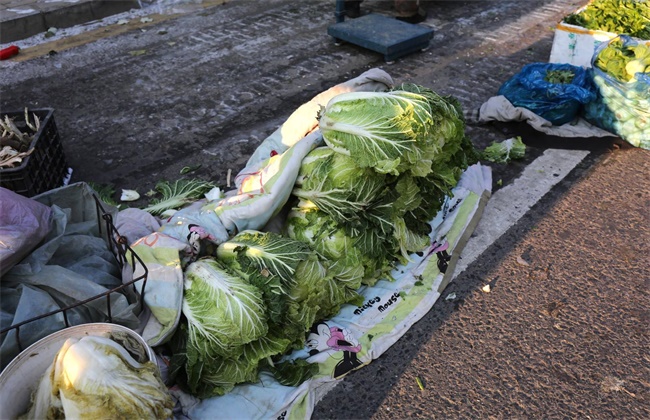
Low temperature harms cabbage in two ways. The first is low-temperature damage, also called chilling injury, which mainly occurs during the heading stage of cabbage. When the temperature is below 10°C, the growth rate of Chinese cabbage becomes extremely slow, and when it is below 5°C, growth basically stops. In the north, temperatures drop faster than in the south, and cold waves also arrive earlier, causing temperatures to plummet sharply, resulting in loose heads and lower yield and quality in cabbage. The second is freeze damage. When cabbage is grown in northern regions, about half a month before harvest, cold waves and snowy weather may suddenly occur, with temperatures dropping below 0°C, which very easily causes freeze damage to cabbage leaves that is difficult to recover from.
II. Prevention and control measures
1. Irrigation
After a strong cold air invasion, when the weather is clear, there is no wind or only a slight breeze at night, and the temperature drops rapidly, especially when the ground surface temperature is below 0°C, a large amount of well water can be irrigated to raise the ground temperature, bringing the ground surface temperature up to around 8°C, which can avoid the occurrence of frost. Generally, irrigation is done in North China in early to mid-November, in the Northeast and Northwest in mid to late October, and in the Yangtze River basin from late November to early to mid-December.
2. Spraying water
Before frost occurs, a sprayer can be used to spray water on the plant surfaces, which can slow the drop in plant temperature and also increase the water vapor content in the air, causing water vapor to condense and release heat, thereby moderating the frost.
2. Spraying cold-resistance agents
You can use 100~300 ml per mu of a cold-resistance agent or stress-resistance yield-increasing agent, dilute it with water, and spray it on the plants, which can also achieve a very good cold-resistance effect.
The above is an introduction to prevention and control measures for low-temperature freeze damage in Chinese cabbage. We hope it can help you. To learn more related knowledge, please stay tuned to us.