Detailed explanation of the key points of konjac seed seedling cultivation techniques
Konjac is a kind of underground root vegetable, and it has a relatively large market demand in China. There are many ways to plant konjac now, among which the common ones are direct sowing and seedling transplanting. However, most are mainly based on seedling transplanting, because compared with direct sowing, seedling transplanting can increase yield by about 12%. But when transplanting seedlings, is it necessary to do a good job in all aspects of preparation for konjac? Then let's take a look at the konjac seed seedling cultivation techniques with the editor below!
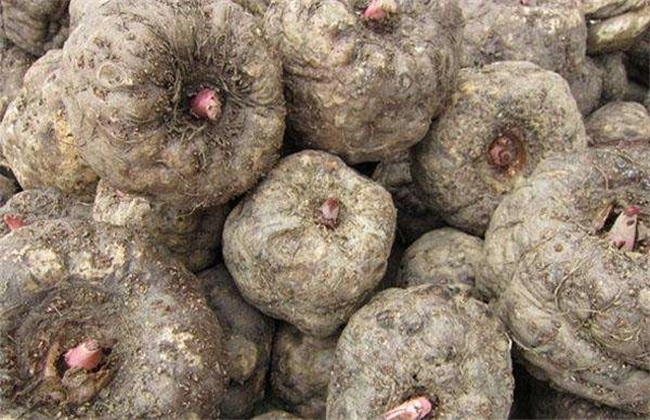
1. Seedbed preparation
Before raising seedlings, we must first prepare the seedbed. The width of the seedbed should be kept at about 130 cm, and then dig ditches around the seedbed, with the depth of the ditches kept at about 15 cm. And around it, soil ridges should also be made according to the size of the seed taro, generally kept at a height of about 12 cm, and the width of the middle sowing area controlled at about 1 m. Then pay attention to covering the arched shed well to increase the temperature of the seedbed and promote the sprouting of the seed taro. The seedbed should be prepared one week before the seed taro is sprouted.
2. Seed taro preparation
After the seedbed is prepared, the preparation work for the seed taro is needed. The sprouting work of konjac seed taro should be carried out four weeks before sowing. First, take out high-quality seed taro on a sunny day, and then disinfect the seed taro. The seed taro can be directly soaked in agents such as agricultural streptomycin for about one day, or soaked in antibacterial agent 401 for about 10 minutes. Copper sulfate aqueous solution, thiophanate-methyl and various other agents can also be used for disinfection. After disinfection, keep the seed taro covered for about 7 hours, then put it in the sun to dry for about two hours, and then separate them according to the size of the seed taro.
3. Sowing at the right time
When sowing the taro, attention should be paid to sowing separately according to the size of the seed taro. Try to ensure that the buds of all seed taro are even, and pay attention to keeping a spacing of about one finger between each seed taro. Then spray the seed taro with pesticide, and after spraying, cover with a layer of wet soil about two cm. If the soil is not dry, there is no need to water. After covering with soil, do a good job of building the arched shed. In order to avoid excessive humidity in the seedbed, the film may not be covered. The frame of the arched film should be inserted at the edge of the ditch to prevent water vapor from flowing into the seedbed and causing excessive humidity.
4. Management and transplanting
If the seedbed soil turns white and dry, then a small amount of water can be appropriately added, not too much, to avoid excessive humidity causing diseases. Then do a good job in temperature management. When the buds of the seed taro grow to about 1.5 cm and begin to take root, they can be transplanted. If the roots are too long, they are easily damaged during transplanting. If the field is covered with plastic film, then transplanting can be done about one week earlier, and the seedling cultivation time can also be appropriately advanced by one week. When transplanting, if there are diseased taro, they should be picked out. Those that have not sprouted should wait until they sprout before transplanting. Remember not to choose rotten taro, diseased taro, etc., to ensure the normal growth of konjac.
The above is a brief introduction to konjac seed seedling cultivation techniques. That is all for today's introduction. This article is for reference only, and I hope it can help everyone!