What are the precautions for fertilizing eggplants? Master these key points
Eggplant is a vegetable that many people enjoy eating. Both household and commercial cultivation areas in our country are very large. When growing eggplants, watering and fertilizing are very important tasks. If eggplants do not absorb enough water and nutrients, it will have a great impact on the yield and quality of the eggplants. However, there are many things we need to pay attention to when fertilizing. So let's take a look together at the precautions for fertilizing eggplants!
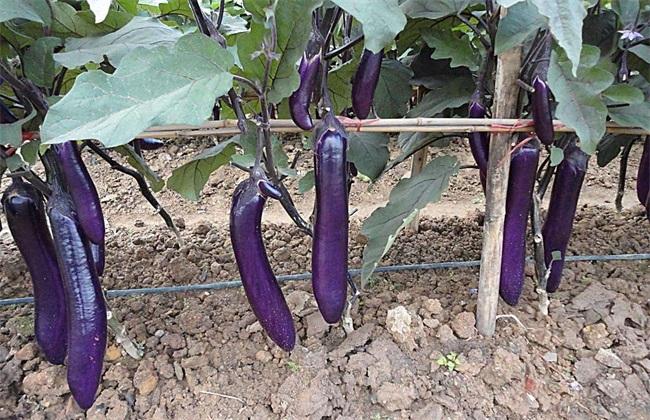
1. Pay attention to the amount of nitrogen fertilizer applied
Although eggplants have a relatively large demand for nitrogen fertilizer during their growth process, we should follow the principle of applying small amounts frequently when applying nitrogen fertilizer. Each time urea or other nitrogen fertilizers are applied, the amount should not exceed 30kg. Because after urea enters the soil, it is easily transformed. After the eggplant plants absorb sufficient nitrogen, the excess nitrogen will be fixed by the soil. Especially in sandy soil and other soils with good permeability, the proportion of nitrogen fertilizer loss will be even greater.
Moreover, if too much nitrogen fertilizer is applied, it will have a great impact on the growth of eggplants. Nitrogen fertilizer will produce a large amount of ammonia gas, causing the leaves, fruits and other organs of eggplant plants cultivated in protected areas to suffer gas damage. In addition, if there are excessive nutrients, eggplant plants are prone to cell division and other conditions, leading to excessive vegetative growth, resulting in deformed fruits, small fruits and rotten fruits. Therefore, when fertilizing, we should pay attention to controlling the amount of nitrogen fertilizer applied, and must never apply too much.
2. Fertilizer should not be applied by washing it down with water
Many people are used to applying fertilizer together with watering when fertilizing. Although this method is relatively common, it is not suitable for use in summer and other high-temperature seasons. Because in a high-temperature environment, if chemical fertilizer is washed down with water, the chemical fertilizer will produce a large amount of ammonia gas, which will not only reduce fertilizer efficiency but also easily cause ammonia poisoning in eggplants. Therefore, when fertilizing, we should adopt methods such as furrow application and hole application, then water with an appropriate amount after application, and cover with about 5cm of soil after topdressing to avoid excessive volatilization of chemical fertilizer.
3. Pay attention to the nutrient ratio of fertilizers
Although eggplants have the greatest demand for nitrogen fertilizer during their growth process, we should not ignore the application of phosphorus and potassium fertilizers, and we should not apply only nitrogen fertilizer or favor it excessively when fertilizing. After eggplants enter the full fruiting stage, apply about two rounds of three-element compound fertilizer as topdressing. Keep the amount at 40kg/mu. This provides sufficient nutrients for eggplant growth. However, in the late growth stage of eggplants, the amount of phosphorus fertilizer applied as topdressing should also be controlled. This prevents excessive phosphorus fertilizer from causing excessive development of fruit seeds, resulting in hardening of the seed coat and reducing the edible value of eggplants.
The above is a brief introduction to the precautions for fertilizing eggplants. That is all for today's introduction. This article is for reference only, and I hope it can help everyone!