Detailed Explanation of Key Points for Autumn-Winter Crop Tomato Cultivation Techniques
Everyone is surely familiar with the tomato, which is what we commonly call the tomato. Tomato cultivation area in our country is very large, and tomatoes also have great nutritional value. Tomatoes are generally planted in spring and autumn. So how should autumn-winter crop tomatoes be planted now? Below, the editor brings you the cultivation techniques for autumn-winter crop tomatoes. Let's take a look!
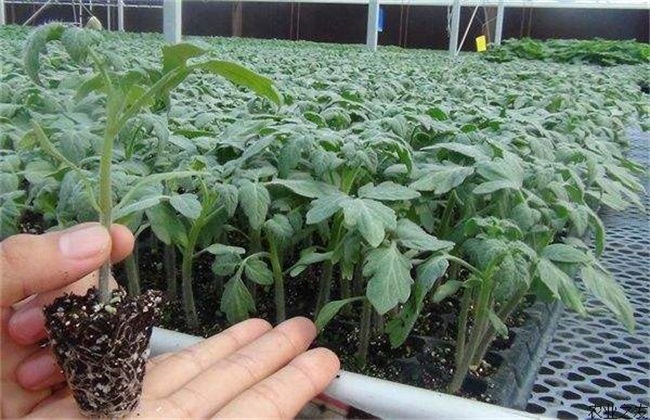
1. Seed Treatment
Before sowing, we first need to prepare the seedbed. We can use some greenhouses whose film has not yet been removed, or build an arched shed about 1.2 m high for seedling cultivation. Because in autumn there is still sunlight, and the light is relatively strong, shading work also needs to be done well. Then select good-quality seeds and soak them in warm water at about 55°C for about 20 minutes. When the water temperature drops to about 20°C, leave them in the water for about another 45 minutes. Then remove the seeds and place them in a medicinal solution such as trisodium phosphate for half an hour, remove and rinse them clean, and then begin germination. After half of the seeds have sprouted white, they can be sown.
2. Timely Sowing
After completing the preparation of the seedbed and seeds, we need to find the right time to sow. The sowing time for autumn-winter crop tomatoes is generally around the Mid-Autumn Festival each year. The seedling method is mainly seedling trays, and the specific number of holes in the plug tray should be selected according to the number of seedlings, generally mainly 72-hole and 128-hole trays. The preparation of the seedling substrate is also relatively important, mainly using twice as much peat and one part vermiculite. The substrate should be disinfected with agents such as carbendazim, and then an appropriate amount of compound fertilizer such as nitrogen, phosphorus, and potassium should be added as base fertilizer.
3. Seedling Stage Management
After sowing, management should be strengthened to promote the growth of seedlings. Tomato seedlings are susceptible to damage from diseases and pests such as late blight and aphids. Agents such as potassium permanganate and imidacloprid can be sprayed for control. After the seedlings grow one true leaf, thinning and replanting should be done well. Also pay attention to adjusting temperature and humidity to prevent a high-temperature and high-humidity environment from affecting seedling growth. Before sowing, a shade shed should be set up, and then every evening a small amount of water can be appropriately applied to lower the temperature. While meeting the seedlings' light requirements, it is also necessary to prevent excessive light from causing seedling legginess. One week before planting, attention should be paid to hardening the seedlings to improve the survival rate after planting.
4. Timely Planting
Before planting, sufficient base fertilizer should be applied to the field where planting will take place, mainly farmyard manure, combined with an appropriate amount of superphosphate, etc. Then plow the soil deeply and make beds in preparation for planting. During seedling cultivation, if 128-hole plug trays are used for raising seedlings, then plant when the seedlings grow 5 true leaves and 1 heart leaf; for 72-hole trays, plant when there are 7 true leaves and flower buds are appearing. Planting should be done on cloudy days or in the afternoon on sunny days. Planting should mainly use wide and narrow rows, with the wide row spacing controlled at about 80 cm, the narrow row spacing controlled at about 50 cm, and the plant spacing maintained at 30 cm. After planting, water sufficiently.
The above is a brief introduction to autumn-winter crop tomato cultivation techniques. That is all for today's introduction. This article is for reference only, and we hope it can help everyone!