How to prune and thin out bitter melon branches? Correct methods and key technical points
Bitter melon is a vine plant with an extremely strong ability to sprout branches and vines. During its growth, it needs to be managed and organized to increase yield and quality. Generally speaking, this can be summarized as pruning and thinning out branches, which ensures good ventilation and light penetration between plants and reduces unnecessary nutrient consumption. So how should bitter melon be pruned and thinned out? Let's take a look.
1. Training the vines
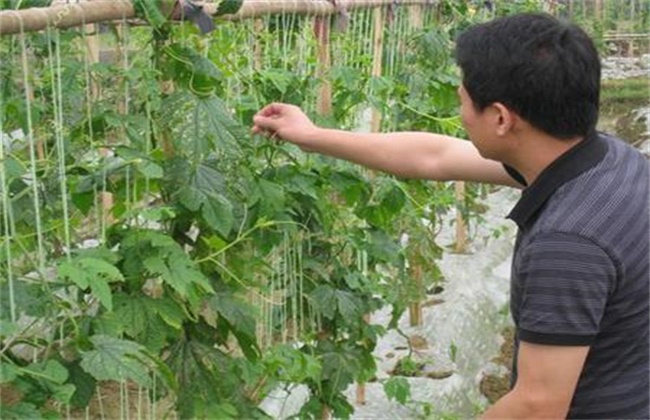
When the bitter melon vines grow to about 40-50 cm, it is time to set up a trellis or tie ropes to hang the vines, so as to guide the stems and vines onto the trellis to bear fruit. Nylon rope or similar material can be used to tie and wrap around the middle and lower parts of the stems and vines, with the hanging ropes tied to a wire or shed frame about 2 m above the planting bed. Note here that when hanging and training the vines, keep the main vine direction consistent for each row, so that the leaves are evenly distributed, space can be used to the maximum, and more light can be obtained. At the same time, properly remove the side vines below 30 cm to reduce nutrient loss.
2. Topping and pinching
After the main vine of the bitter melon is trained onto the trellis, it is time to top and pinch it. Select 2-3 strong-growing side vines as fruit-bearing vines. After the side vines set fruit, keep 2 leaves in front of the fruit and bend them over. After the fruit on the side vines is harvested, cut off the side vines promptly to encourage new fruit-bearing vines to sprout. In addition, promptly remove the excess vines, diseased and pest-damaged vines, thin and weak vines, fruitless vines, and tendrils on rainy days from the stems and vines. This can reduce unnecessary nutrient consumption by the plant and also increase air and light penetration, so as to synthesize more nutrients and promote plant growth. Also note that whenever two female flowers grow on a side vine, one well-developed and robust one should be retained, and the other poorly developed one should be removed promptly.
3. Leaf removal
When bitter melon enters the period of heavy fruit set, in order to avoid excessive growth of ineffective stems, vines, and leaves that affects fruit setting and fruit swelling, promptly cut off the old, yellow, diseased, and damaged leaves in the middle and lower parts of the plant, branches and vines that do not bear fruit, branches and vines at the top with no flowers or fruit, as well as diseased and pest-damaged fruit and deformed fruit. This can maximize nutrient savings and promote fruit setting and fruit swelling.
The above is an introduction to how to prune and thin out bitter melon branches. We hope it helps you. To learn more related knowledge, please stay tuned to us.