How to grow peas for high yields? A full breakdown of the key growing points
Peas are a vegetable we are all very familiar with. Not only can we eat the fresh peas, but the tender pods have also become a delicacy on the table. Many farmers report that peas are difficult to manage and produce low yields, but in fact, once you master the right growing methods, achieving a high pea yield is actually quite simple. Let's take a look below.
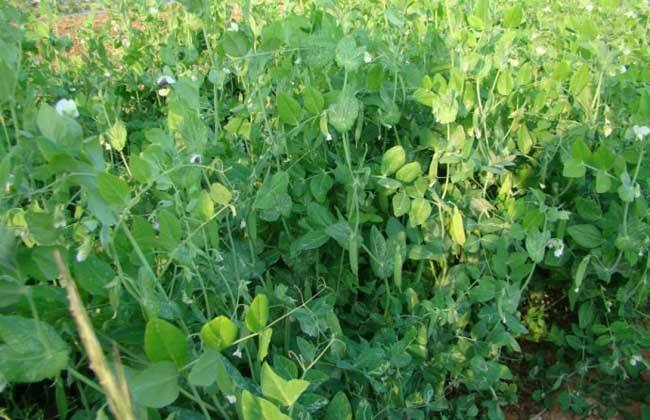
1. Seed treatment
Before sowing, select the seeds carefully. You can pour the seeds into a 40% salt solution and scoop out the unfilled seeds and pest-damaged seeds floating on top. Then sun-dry the seeds for 2-3 days to boost seed vigor, so they emerge earlier after sowing. In plots where peas have never been grown, inoculating with rhizobia at sowing time can increase pea yields.
2. Field fertilization
To increase yields, you must first ensure the soil has sufficient nutrients. Generally, apply 2000 kg of decomposed farmyard manure, 20-30 kg of superphosphate, and 7-10 kg of potassium sulfate or 50-100 g of plant ash per mu. This provides sufficient nutrients throughout the whole growth period of peas to support their growth. For plots with poorer soil fertility or short-season early-maturing varieties, you can add 5-10 kg of urea to the base fertilizer to promote strong seedlings and rapid nodule formation.
3. Sowing
For open-field peas, use hole sowing or drill sowing. In low-lying wet areas, use ridge planting. In dry conditions, you can open furrows and water them. Generally, sow two rows per bed, with a hole spacing of 21-24 cm and 3-4 seeds per hole. Before winter arrives, the seedlings should already have 3-5 true leaves, so that their cold resistance is sufficient for safe overwintering; otherwise, they are very likely to die during winter.
4. Field management
If the nitrogen in the base fertilizer is insufficient, when the seedlings grow to 7-9 cm, you can apply 5 kg of urea per mu as a top dressing to promote seedling growth. After the seedlings turn green again the next year, cultivate and top-dress, and at the same time thin out poorly growing seedlings. During the vigorous growth period, apply fertilizer once together with watering. During the pod-setting stage, demand is high, so in addition to soil fertilization, foliar fertilizer is also needed. Before winter, cultivate and earth up around the plants to protect the roots and guard against cold. In severe cold regions, you can cover with a layer of straw or plastic film during winter to protect the seedlings through safe overwintering.
The above is an introduction to the key points for high-yield pea cultivation. We hope it helps you. To learn more related knowledge, please stay tuned to us.