Causes of and Control Methods for Internal Tipburn in Chinese Cabbage
Chinese cabbage can be grown anywhere, and it is one of the vegetables that rural areas and vegetable growers like to plant. It has a high survival rate and high yield, but during the growing process it is very prone to a disease called internal tipburn, which seriously affects the yield and quality of Chinese cabbage. Many people do not know the causes of and control methods for internal tipburn in Chinese cabbage, so below the editor will give a brief introduction.
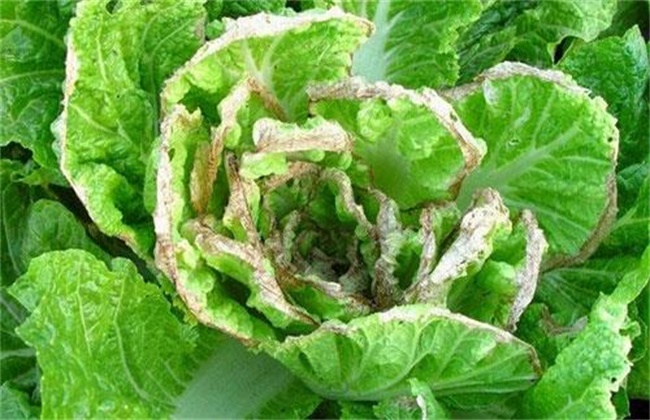
1. Symptoms of internal tipburn in Chinese cabbage
Internal tipburn in Chinese cabbage is also called "jiapilan" (leaf-wrap rot). When the disease occurs, there is no abnormality in appearance, but the inner head leaves deteriorate and cannot be eaten. It mainly appears at the rosette stage, with symptoms including dry, withered edges of the heart leaves, curling inward, and inhibited growth. At the early heading stage, the leaf edges become water-soaked, then turn yellow and semi-transparent to yellow-brown and scorched; after heading there is no abnormality.
2. Causes of internal tipburn in Chinese cabbage
There are many causes of internal tipburn in Chinese cabbage, mostly due to soil problems and calcium deficiency. For example, low soil organic matter content and excessive application of chemical fertilizers lead to higher soil concentration, which affects the roots' absorption of calcium. Or excessive application of nitrogen fertilizer causes calcium deficiency under high temperature and dry conditions, leading to heart rot. Calcium deficiency, soil acidification, and fluctuating soil moisture also affect the roots' absorption of calcium. In addition, severe deficiency of active manganese in calcareous soils in the north can also cause internal tipburn in Chinese cabbage.
3. Control methods
First, choose Chinese cabbage varieties with strong disease resistance. When planting, apply heavy organic fertilizer, raise soil temperature, and water appropriately. Especially when fertilizer and water are applied together, be sure to pay attention to the concentration, so as not to cause internal tipburn due to excessive concentration. During the growing period, increase the application of organic fertilizer, reasonably match phosphorus, potassium, and micro-element fertilizers, and apply less single nitrogen fertilizer. At the heading stage, spray calcium-containing foliar fertilizer on the heart leaves, preferably once about every 10 days, which can excellently supplement the plant's calcium and prevent internal tipburn.
The above is an introduction to the causes of and control methods for internal tipburn in Chinese cabbage. We hope it helps you. If you want to learn more related knowledge, please follow us.