Common winter wheat sowing mistakes to avoid
The peak winter wheat sowing period has arrived recently, and a little carelessness during sowing can lead you into winter wheat sowing mistakes, which at best affect wheat emergence and at worst cause seed rot and dead plants. So what should you pay attention to when sowing winter wheat? Let's take a look together.
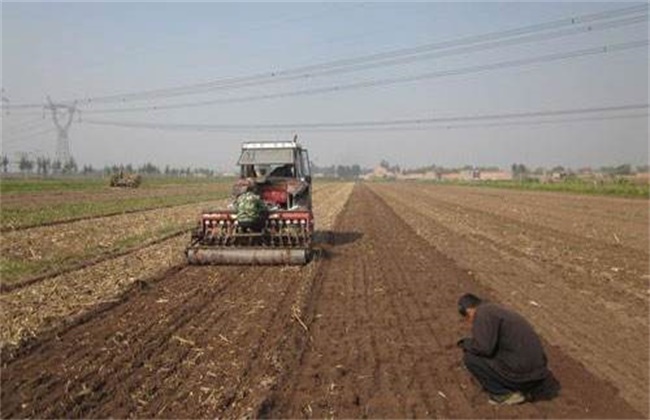
1. Sowing too early
If wheat is sown too early, after the seedlings emerge the leaves will be narrow and long with insufficient tillering, and the main stem and some large tillers will enter the double-ridge stage of young ear differentiation before winter; when winter temperatures drop to minus 10 degrees, freezing damage will occur. Therefore, when sowing in winter, press the soil in good time to inhibit the growth of the main stem and large tillers; after pressing, you can also hoe in time, and if necessary spray a chlormequat solution to control vigorous growth and resist freezing damage.
2. Sowing too late
The pre-winter growth period of winter wheat is already short, and if sowing is too late, accumulated temperature will be insufficient, causing the wheat seedlings to grow thin and weak with fewer tillers. So farmers should focus on hoeing and supplementing fertilizer and water, applying nitrogen fertilizer at the three-leaf stage of the wheat seedlings; for wheat fields with poor soil moisture and fast water infiltration, irrigate with tillering water in time after the three-leaf stage; while for plots with suitable soil moisture or with heavy, poorly permeable soil, do not water before winter, to avoid excessive growth of the wheat seedlings.
3. Sowing too shallow
The suitable sowing depth for wheat is about 3-5 cm; sowing too shallow will cause the wheat seedlings to grow prostrate, with exposed tillering nodes, many but small tillers, and susceptibility to freezing and premature aging. Therefore, farmers can press the soil several times before the wheat seedlings emerge, and after emergence combine hoeing with earthing up around the roots; if necessary, during the overwintering period use soil from elsewhere to cover them or apply “mengtoufen” to prevent freezing damage during overwintering.
4. Sowing too deep
If the wheat sowing depth exceeds 5 cm, then it is sowing too deep; sowing too deep will cause the wheat seedlings to emerge more slowly, and because they consume more nutrients during emergence, the leaves become slender, the tillers few and small, the secondary roots few and weak, and the wheat seedlings yellow and thin. At this time, promptly scrape away the soil to clear the seedlings, using a bamboo rake or iron rake starting from the center of the border surface, raking horizontally along the rows; when you clear to the last row, just drag all the remaining soil onto the border ridge.
The above is an introduction to common winter wheat sowing mistakes. We hope it helps you. To learn more related knowledge, please follow us.