The Best Time and Practical Methods for Controlling Vigorous Growth in Sweet Potatoes
In sweet potato production, factors such as excessive nitrogen fertilizer, too much water and fertilizer, and high temperature with frequent rain can cause the vines to grow more and more vigorously, and can even lead to the phenomenon of "growing only vines and no tubers." Therefore, controlling vigorous growth in sweet potatoes to increase yield and quality is the ultimate goal. So how should sweet potatoes be controlled from growing too vigorously? Let's take a look together.
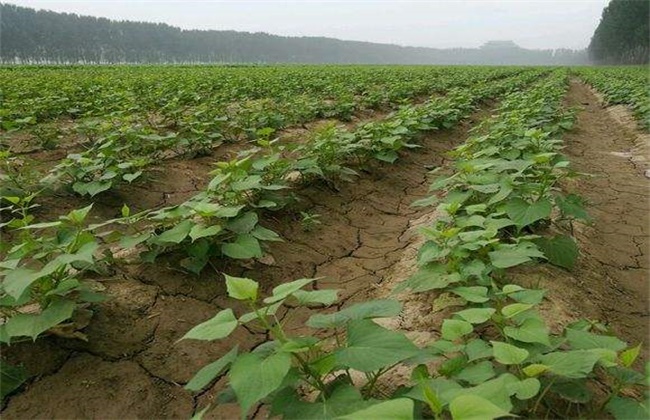
1. Timing of vigorous growth control
During the first swelling of the sweet potato, when the vines are about 35-45 cm long, the sweet potato is in the branching and tuber-setting stage, with branches forming above ground and tubers forming below ground, so moderate vigorous growth control is needed at this time. The second vigorous growth control is generally about 65-70 days after planting, when it is the season of high temperature and high humidity, and also the period of vigorous stem and leaf growth in sweet potatoes, but the tubers swell relatively slowly, so vigorous growth control should be the focus at this time. The second vigorous growth control occurs about 85-90 days after planting, when the stem and leaf growth of sweet potatoes reaches its peak, preparing for the second swelling stage, so timely vigorous growth control is needed at this time.
2. Vine lifting for vigorous growth control
Generally, when the sweet potato vines are 40-50 cm long, vine lifting for vigorous growth control has the best effect. Its main purpose is to prevent the growth of fibrous roots on the sweet potato vines, control nutrient loss, and also effectively prevent the sweet potato vines from growing excessively. Simply lift the sweet potato vines gently to avoid damaging the stems and leaves, as long as it prevents fibrous root growth. If instead you turn the vines over for vigorous growth control, reversing the vines, this can easily damage the sweet potato stems and leaves; if the stems and leaves face the ground, it may also affect the photosynthesis of the sweet potato, causing a reduction in yield.
3. Vine cutting for vigorous growth control
Vine cutting for vigorous growth control is a commonly used method in small-scale rural planting. In the past, rural sweet potato vines were mainly used to feed pigs. Under summer conditions of high temperature and frequent rain, sweet potato vine stems and leaves grow extremely fast, so the sweet potato vines would be cut to feed the pigs, which not only controls excessive vine growth but also uses the sweet potato vines to feed pigs, saving feed, achieving two goals at once.
4. Chemical vigorous growth control
For large-scale planting, chemicals are used for vigorous growth control to achieve increased yield and income. Commonly used vigorous growth control agents include paclobutrazol, chlormequat, and others. If the sweet potato has excessive nitrogen fertilizer, under conditions of high temperature and frequent rain, the effect of chemical vigorous growth control is relatively poor, so to achieve high sweet potato yield, apply less nitrogen fertilizer and more potassium fertilizer.
The above is an introduction to the timing and methods of vigorous growth control in sweet potatoes. We hope it helps you. To learn more related knowledge, please stay tuned to us.