How to cultivate eggplant after autumn? These techniques you need to master
Eggplant is a common home-cooked dish on our dining tables, rich in nutrients, and many farmers also choose to grow it. Autumn is also a good time for planting eggplant, but late autumn temperatures are relatively low, which is unfavorable for eggplant growth and development. So how should eggplant be planted after autumn? Let's take a look together.
1. Seed and site selection
For planting eggplant after autumn, choose varieties with strong growth vigor, heat tolerance, cold tolerance, disease resistance, and good market quality, to lay the foundation for high yield. The seedling bed should also be selected as fertile land rich in organic matter, convenient for drainage and irrigation, sheltered from the wind and facing the sun, and where solanaceous vegetables and potatoes have not been planted within three years. This can reduce the disease incidence rate and allow eggplant to grow and develop better.
2. Seed treatment
Autumn temperatures are relatively low, and the accumulated temperature for seed germination is insufficient, so the germination rate is relatively low. Therefore, to increase the germination rate and promote strong and uniform seedlings, warm water soaking treatment can be used before sowing. That is, use hot water at about 55 degrees, stirring while adding the seeds, until the water temperature drops to 30 degrees, stop stirring, then continue soaking the seeds for 5-8 hours, remove the seeds and rub them clean, rub off the mucilage on the surface, air-dry them, and then sow. Alternatively, the seeds can be soaked in clean water for 5-8 hours, and after they have absorbed enough water, remove them and soak them in a 500-fold carbendazim solution or thiophanate (thiophanate-methyl) medicinal solution for 15-20 minutes. This can play a sterilizing role. Rinse them clean with clean water before sowing.
3. Sowing and raising seedlings
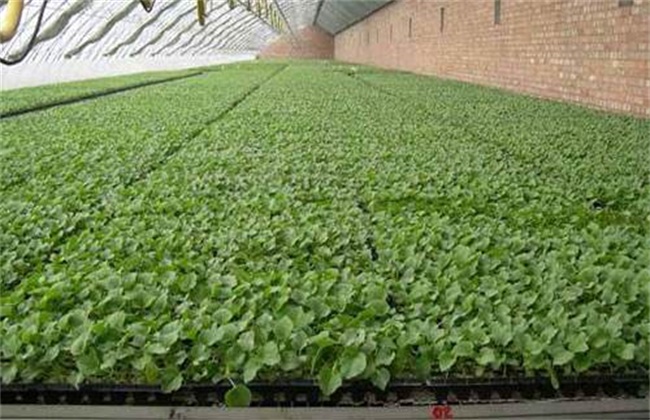
After autumn, the air temperature and soil temperature during the eggplant sowing period are still relatively high, so sowing and raising seedlings can be done in the open field. For seedling bed sowing, it is generally 4-5 grams per sq m, while one mu of field generally requires 4-5 sq m of sowing seedling bed and 35-40 sq m of pricking-out seedling bed. 2-3 days before sowing, the land needs to be prepared and fertilized, with 1-2 kg of decomposed chicken manure applied per sq m per mu, and the surface soil can be disinfected and sterilized with carbendazim or thiophanate agents.
The above is an introduction to eggplant cultivation techniques after autumn. We hope it can help you. To learn more related knowledge, please follow us.