How to grow Chinese mallow? Detailed guide to planting time and methods
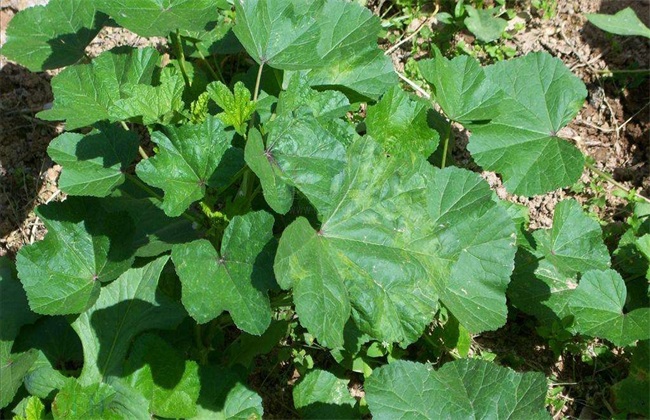
Chinese mallow (Malva verticillata) is an annual herbaceous plant in the Malvaceae family with high nutritional value; its main edible parts are the seedlings or tender stems and leaves. The whole plant can also be used as medicine, with various effects such as promoting diuresis and lactation, and moistening the intestines to relieve constipation. Its cultivation area in China is relatively large, so when should Chinese mallow be planted? And how should it be grown? Below, the editor brings you the planting time and methods for Chinese mallow. Let's take a look!
1. Planting time
If Chinese mallow is cultivated in open fields, it is generally done in spring and autumn. Because Chinese mallow has relatively poor heat tolerance, sowing in summer can easily lead to seedling deterioration and death, so it is not suitable for summer planting. In northern regions, because temperatures are relatively low after entering autumn, open-field cultivation is not possible. Therefore, in the north, spring sowing should be the main approach, generally carried out after the soil thaws in March. Sowing time should not be too late, otherwise rising temperatures and stronger light will affect the quality of Chinese mallow. If cultivated in a solar greenhouse, sowing can be done in batches for year-round production.
2. Land preparation and fertilization
Chinese mallow actually has no strict requirements for soil and can grow normally in most soil types. Whether poor or fertile soil, Chinese mallow can be planted; however, although it can grow normally, this still has a certain impact on the yield and quality of Chinese mallow. Therefore, the soil should mainly be loose, fertile soil with good drainage and irrigation. Before sowing, land preparation should be done well, applying about 2500 kg of decomposed farmyard manure per mu, mixed with an appropriate amount of ternary compound fertilizer. Then deeply plow and rake the soil level, and make wide beds ready for sowing.
3. Timely sowing
The main propagation method of Chinese mallow is seed propagation; if direct seeding is used, drilling is mostly adopted. Dig sowing furrows with row spacing controlled at about 20 cm, then evenly scatter the seeds into the furrows and cover with soil. If raising seedlings, first do the work of soaking seeds to promote germination: soak the seeds in warm water for about 10 hours, then remove them, wipe them dry, wrap them in a damp cloth, and place them in a 22-degree environment to promote germination. Then level the seedbed, water it thoroughly, and evenly scatter the seeds; after scattering the seeds, cover with a layer of fine soil about one centimeter thick. After the seedlings emerge, water them in time, and do a good job in intertillage, weeding, and water and fertilizer management.
4. Field management
When the seedlings grow to three true leaves and one heart leaf, thin them so that the plant spacing is controlled at about 5 cm. Then, when 5 true leaves have grown, finalize the seedlings, with plant and row spacing controlled at 15*25 cm. During the seedling stage, weeds also grow relatively vigorously, so attention should be paid to weeding, while appropriately carrying out intertillage to prevent soil compaction. After finalizing the seedlings, water and fertilize reasonably, mainly with urea, applying about 6 kg per mu. After entering the late harvest period, attention should be paid to controlling the application of nitrogen fertilizer to prevent excessive nitrate residues.
The above is a brief introduction to the planting time and methods of Chinese mallow. That is all for today's introduction. This article is for reference only, and we hope it can be helpful to everyone.