What to Do About Root Rot and Dead Plants in Common Beans? Cause Analysis and Control Methods
Common bean is the same as the green bean, and during common bean cultivation, dead plants caused by root diseases are quite serious. Many farmer friends often have over one mu of common beans, only sell a few hundred yuan worth, and then all the plants die, causing relatively large losses. So what are the causes of root rot and dead plants in common beans? Let's take a look together.
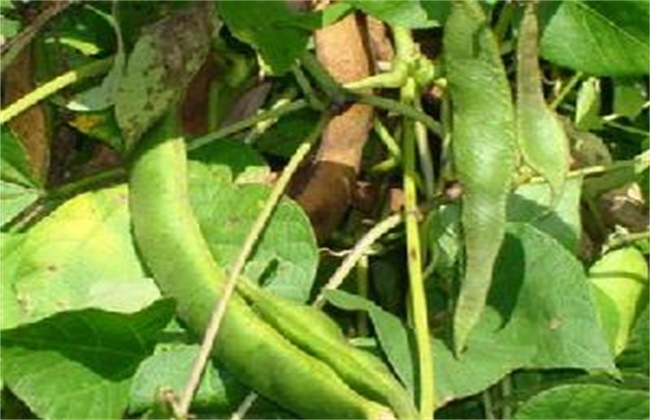
I. Causes of Root Rot and Dead Plants in Common Beans
1. Fusarium wilt
This disease occurs relatively mildly in the early growth stage, generally starting at the early flowering stage. The main symptom is that the plant leaves turn yellow from bottom to top, the leaf veins turn brown, and leaf drop occurs very easily. When the disease occurs in the middle and late growth stages, in mild cases the vascular bundles on one side of the stem turn brown, and in severe cases all of them turn brown. Moreover, the plant has very few roots and is very easy to pull out; after pulling out, the root system will be found to be rotted.
2. Stem base rot
This disease, as the name suggests, is a disease that occurs at the stem base. When it occurs, sunken white-reddish-brown ulcer lesions appear at the diseased part. When the pathogen extends into the stem tissue, the tissue inside the stem turns red brick color. This disease should be controlled by combining physical and chemical methods.
3. Fusarium root rot
In the early stage of disease occurrence, water-soaked red-brown spots appear at the diseased part, then gradually turn dark brown or black-brown, slightly sunken or cracked, and afterward gradually expand, causing the main root to rot or necrose.
4. Physiological disease
Common bean is drought-tolerant but not waterlogging-tolerant, and likes loose, fertile soil with good aeration. If the soil is too sticky and heavy, has poor aeration, or if there is water accumulation in the field, its root system is inhibited, causing leaves to yellow and drop, and in severe cases dead plants also occur. Excessive application of chemical fertilizers causes the soil salt ion concentration to be too high, which also very easily causes root rot and dead plants.
II. Control Methods
1. Physical control
After selecting a good planting site, on the basis of leveling the ground, cultivate on ridges to prevent water accumulation in the field and the problem of root suffocation. At the same time, during planting, strengthen intertillage to loosen the soil and increase soil permeability, which is beneficial to root growth and development and reduces the chance of disease infection.
2. Chemical control
On the basis of physical control, combine with chemical control. For Fusarium wilt, 30% hymexazol, copper ammonia complex, etc. can be used for root drenching control; for stem base rot, Beisheng, tolclofos-methyl can be used for control; for Fusarium root rot, Xiaojunling or Jiaruinong can be used for control.
The above is an introduction to the causes and control methods of root rot and dead plants in common beans. We hope it can help you. If you want to learn more related knowledge, please follow us.