How to ventilate a greenhouse in winter? These methods must be mastered
Greenhouse cultivation is a major planting model that can effectively regulate growing temperature and humidity. Greenhouses can be used for off-season cultivation and more, and their economic benefits are very good. When we carry out greenhouse cultivation, ventilation work is very important. Especially in winter, so how should a greenhouse be ventilated in winter? Below, the editor will briefly introduce it to everyone, let's take a look!
1. Install buffer film
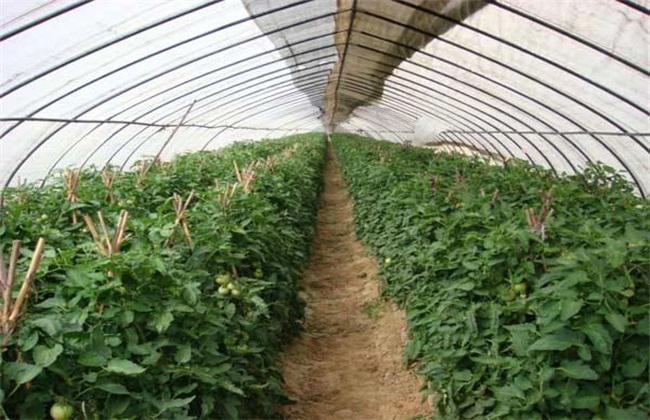
First, we should install buffer film at the ventilation point. The buffer film can prevent weeds, dust and so on from outside the greenhouse from entering the greenhouse and falling onto plant leaves. This affects the photosynthesis of crops, but its main role is still to prevent cold air from blowing directly onto the crops during ventilation. This causes rapid changes in the temperature and humidity on the surface of vegetables, leading to dry edges, chapped skin and similar phenomena. The buffer film can play a protective role for the growth of vegetables. After the buffer film is installed, the cold air from outside will be pushed by the buffer film to the back wall after entering the greenhouse, which can extend the distance for the cold air to reach the vegetables. This provides time for convection between the cold air and the hot air inside the greenhouse, preventing various adverse phenomena in vegetables.
2. Ventilate after watering
After watering in the greenhouse, the ground temperature will begin to drop noticeably. If ventilation is carried out after watering, then the temperature inside the greenhouse will remain low for a long time. If vegetables are in a low-temperature environment for a long time, the damage to the roots is very great, thereby affecting the roots' ability to absorb wastewater. However, after watering, it is also not possible not to water. If the ventilation openings remain closed, the humidity inside the greenhouse will be too high. When the temperature drops at night, a lot of dew will be produced, leading to infection by pathogenic bacteria. It will also reduce the carbon dioxide content, affecting the photosynthesis of crops, which is very unfavorable to the growth of vegetables.
3. Reasonable ventilation
When the greenhouse is just opened, because the temperature inside the greenhouse is similar to the temperature of the plants, dew will not be produced on the vegetable plants. However, as the temperature of the plants inside the greenhouse continues to rise, the temperature of the plants rises more slowly than that of the greenhouse, resulting in too great a temperature difference. This causes dew to appear on the vegetables. If ventilation is carried out at this time, the entry of cold wind will dry the dew, leading to dry leaves and chapped skin. When the temperature inside the greenhouse is too high, ventilation should be carried out gradually, and the vents should not all be opened at once. If the temperature changes greatly, it is very unfavorable to the growth of vegetables.
4. Ventilation on cloudy days
In greenhouse cultivation, cloudy days are the weather that growers least want to see. If managed improperly, the impact on the growth of vegetables is very great. Especially for melon and bean vegetables, some growers choose not to ventilate on cloudy days in order to ensure the temperature inside the greenhouse, which is very unfavorable to the growth of vegetables. On cloudy days, if the temperature inside the greenhouse is suitable, we must also open the ventilation openings for ventilation. However, pay attention to the ventilation time and do not ventilate too early, to prevent the temperature inside the greenhouse from being too low.
The above is a brief introduction to how to ventilate a greenhouse in winter. That is all for today's introduction. This article is for reference only, and I hope it can help everyone!