Master the techniques for flower dipping in greenhouse vegetables, and you need to know these precautions
Greenhouse-cultivated vegetables often fail to pollinate normally due to insufficient light and unsuitable temperature and humidity, resulting in serious flower and fruit drop. Therefore, in greenhouse vegetable production, plant hormones are often used for flower dipping to increase yield, which can raise the fruit-setting rate, accelerate fruit enlargement and increase yield. However, improper operation can lead to deformed fruit and reduced yield. So how should greenhouse vegetables be dipped in flowers? Let's take a look together.
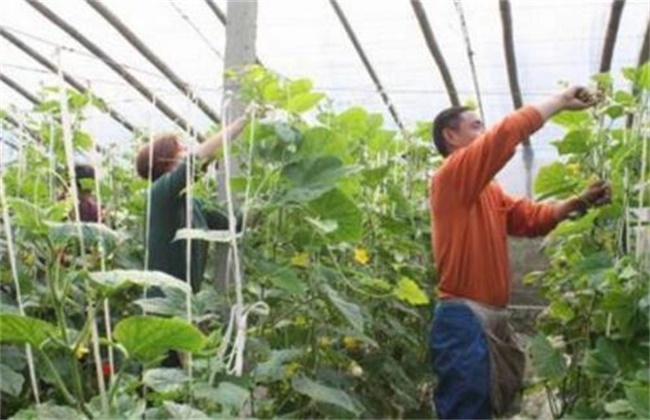
1. Selection of flower-dipping agents
Commonly used flower-dipping agents include 2,4-D and fruit-setting hormone (4-CPA). Both can be used on solanaceous vegetables. Studies have shown that dipping flowers with 2,4-D gives a higher fruit-setting rate, but it causes some damage to the young buds and tender shoots of solanaceous vegetables, so it is generally used for dipping or smearing; while fruit-setting hormone causes lighter damage, but its fruit-setting rate is somewhat lower than that of 2,4-D, making it suitable for flower spraying. Therefore, which flower-dipping agent to choose depends on the plant's growth vigor. For plants with strong or weak vigor, reduce the use of 2,4-D for flower dipping, while for plants with moderate vigor, fruit-setting hormone is recommended.
2. Flower dipping techniques
1. Do not spot flowers too early
Many farmers spot flowers extremely early when growing solanaceous vegetables, starting as soon as there are flowers, which often leads to poor differentiation of the first cluster of flower buds, and even after spotting, deformed fruit will develop later. Therefore, during the vegetable seedling stage, the goal should be to cultivate strong plants. Spotting flowers earlier can also direct nutrients to the roots, stems and leaves to cultivate strong seedlings, but a proper limit must be observed.
2. Do not dip too many flowers
The number of flowers dipped should be determined according to the plant's growth vigor. If the plant is growing weakly, fewer flowers should be dipped, and the stems and vines should be strengthened first, suppressing the plant's reproductive growth that causes poor leaf development and leads to frequent pests and diseases.
3. Test first before changing the formula
The preparation of the flower-dipping agent is also extremely critical. If the formula is to be changed, it can very easily cause deformed fruit. Do not casually add hormone-containing foliar fertilizers to the flower-dipping agent. Under different temperatures, the agent concentration must be changed, but a test must be carried out first, and only after the test succeeds should it be used on a large area, so as to avoid huge losses.
3. Precautions for flower dipping
When dipping flowers, pay attention to the timing. Generally, flower spotting can begin when 2 to 3 flowers of the first cluster have opened. Dipping too early easily forms stiff fruit, and too late easily causes fruit cracking. Be careful during flower dipping operation, and do not let the agent drip onto the branches and leaves, as it very easily causes phytotoxicity, resulting in wilting and necrosis at the affected parts. Do not spot the stigma when dipping flowers, as it will stimulate the stigma and easily cause fruit cracking; especially when flowers are spotted repeatedly, in severe cases it can almost cause total crop failure. Also pay attention to soil moisture. If the soil is too dry, water first and then dip flowers, to avoid fruit cracking caused by watering after flower dipping.
The above introduction to greenhouse vegetable flower dipping techniques and precautions is hoped to help you. If you want to learn more related knowledge, please follow us.