What to Do If Vegetables Recover Slowly After Transplanting? Cause Analysis and Solutions
At present, most autumn-crop vegetables have already been transplanted. During the transplanting process, we often find that vegetables in the greenhouse recover quickly, while some seedlings are slow to establish, grow weakly, and this not only affects the time to market but also affects future yield. So what causes this? Let's take a look together.
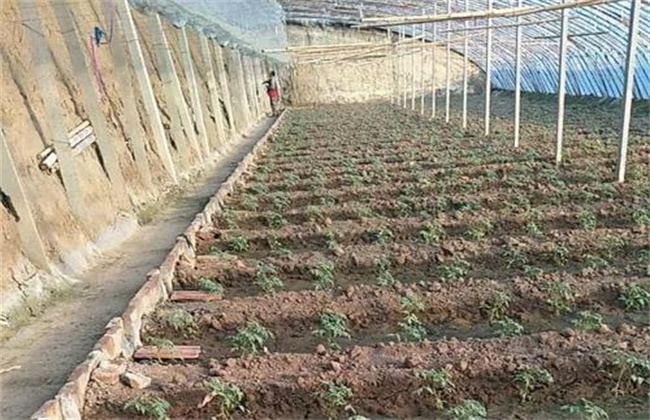
1. Burning of seedlings caused by inadequately decomposed fertilizer
Applying manure that is not fully decomposed before transplanting will cause seedling burning. Some farmers believe that seedling burning is caused by fresh chicken manure, while dried chicken manure is well decomposed and will not cause root burning. In fact, dried chicken manure is just chicken manure that has been dried at high temperature, without any decomposition measures, and it will also cause seedling burning. Therefore, fertilizer applied before or after transplanting must be fully decomposed. If seedling burning has already occurred, water frequently to dilute the harmful substances released by fertilizer fermentation, and pay attention to ventilation to avoid gas damage. At the same time, combine with foliar fertilizer spraying to supplement the nutrients needed by the plants.
2. Root rot caused by improper watering
Many farmers believe that as long as it is not deep winter, the amount of water for vegetables does not matter whether it is more or less. In fact, at any time in the market, too much water will cause insufficient oxygen supply around the vegetable roots, and in severe cases will cause root rot. Once root rot occurs in vegetables, their growth will weaken, they will not establish for a long time, and in severe cases will cause plant death. Therefore, after transplanting vegetables, attention must be paid to watering, and never water too much at one time, so as not to damage the root system. For vegetables with root rot, shallow hoeing should be done in time to increase soil aeration. After the water in the soil decreases, use chitin to irrigate the roots to promote new root regeneration.
3. Root-knot nematode infection
Root-knot nematodes are the most common disease in the seedling stage of vegetables. Many farmers find that vegetables grow slowly when planting, with almost no growth recently. They originally thought it was caused by manure burning the seedlings, but after pulling out the plants, they found that root-knot nematodes on the roots were already very serious. For root-knot nematode control, prevention should be the main approach. During the summer fallow period, high-temperature greenhouse closing should be adopted. Before transplanting, apply chemicals for root-knot nematode control in the planting holes. After the vegetables recover from transplanting, apply abamectin and other treatments with irrigation water, and take sufficient measures in advance to prevent root-knot nematodes.
The above is an introduction to the causes and solutions for slow recovery of vegetables after transplanting. We hope it can help you. To learn more related knowledge, please follow us.