What are the precautions for planting peppers in the autumn crop?
Pepper roots are relatively shallow and weak, with poor rooting ability, and are greatly affected by low temperatures. The autumn crop of peppers is generally planted in late summer and early autumn, when the temperature is still relatively high. In order to enhance the stress resistance of peppers and promote healthy growth, several points should be noted when planting. Let's take a look together.
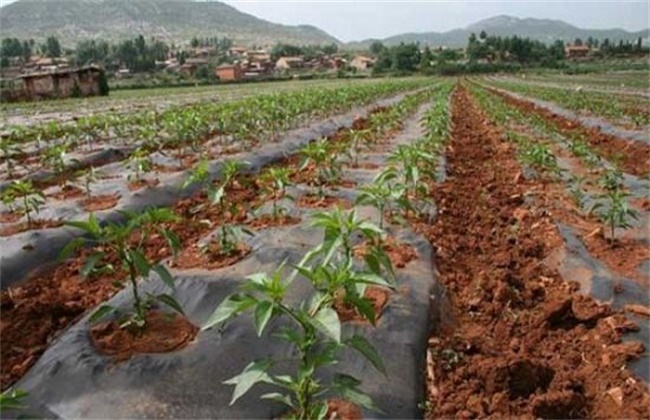
1. Reasonable watering
Many vegetable growers understand that peppers are a crop that likes water but fears waterlogging. When it comes to watering, there is sometimes a misunderstanding: they fear that flood irrigation will cause oxygen deficiency, root rot, and dead plants, which is correct. So they have always adopted the method of light watering at planting. This can lead to the surface soil being moist while the deeper soil is dry, causing roots to spread only in the shallow soil layer, which is not conducive to deep root growth and reduces the stress resistance of the plants. Therefore, in autumn crop pepper cultivation, the planting water must be watered thoroughly, and afterward follow the principle of frequent light watering.
2. Cultivation
In order to increase the stress resistance of peppers and promote healthy growth, after planting peppers, hoeing should be done frequently. Hoeing has many benefits: it loosens the soil, improves soil permeability, increases root respiration, promotes deep root growth, and benefits root growth and development. In addition, it can clear weeds and reduce humidity inside the greenhouse as well as the incidence of disease. It should be noted that when hoeing, follow the principle of from near to far and from deep to shallow. That is, when hoeing around small seedlings, stay closer to the seedlings and go appropriately deeper; when the seedlings are larger, hoe farther from the seedlings and appropriately shallower, to avoid damaging the roots.
3. Reasonable application of rooting agents
Because peppers root slowly, it is necessary to appropriately apply rooting agents to promote root growth and improve the speed at which peppers recover after transplanting. This point is very important. Generally, at planting, rooting agents can be used to dip the roots, or after planting, rooting agents can be used to irrigate the roots. In addition, applying chitosan-based fertilizers or biological bacterial fertilizers with water can both improve root growth and development.
4. Plant management
In order to increase leaf area and speed up plant growth, some side branches and old functional leaves can be pruned later before fruit set. After the plant sets fruit, remove the side branches, diseased leaves, and old leaves. This not only controls excessive vegetative growth but also regulates the plant's growth, while also providing shade for the plant and lowering soil temperature. After fruit set, these side branches should be removed in time to prevent them from competing with the plant and fruit for nutrients, which would lead to reduced yield and weakened plant growth.
The above is an introduction to the precautions for planting peppers in the autumn crop. I hope it can help you. If you want to learn more related knowledge, please follow us.