Causes of Empty Trusses in Tomatoes and How to Solve Them
Hollow trusses in autumn tomatoes occur in different cultivation seasons, especially in the middle and late growth stages, and in delayed autumn tomato cultivation with continuous flowering and continuous fruiting, the empty truss phenomenon often occurs. Generally, after the first truss sets fruit, the second and third trusses are highly prone to empty trusses, so what causes this? Let's take a look together.
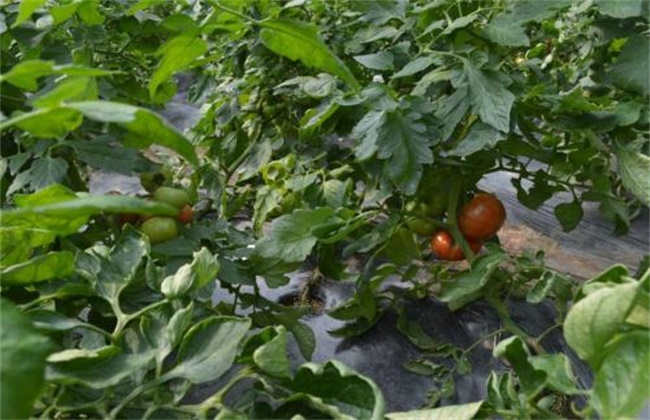
1. Excessive leaf removal
Leaf removal is an important measure to promote tomato color change and increase ventilation and light penetration, but some vegetable growers often remove too many leaves. Although this improves ventilation and light penetration and reduces the possibility of disease occurrence, it also reduces the supply of organic nutrients. So after the first truss fruit is firmly set, the second and third trusses are highly prone to the empty truss phenomenon. Therefore, leaf removal must be done appropriately; simply remove the old leaves and diseased leaves at the lower part, and the other leaves do not need to be touched.
2. Leaving too much fruit
Fruit retention in tomatoes should be reasonable. Many vegetable growers, when retaining fruit on the first truss, generally choose 5-6 fruits to control vigor because they are afraid the plant will grow too vigorously. As a result, the nutrient consumption of the first truss fruit is too great, while the nutrients for the second and third trusses are insufficient, causing the empty truss phenomenon. Therefore, fruit retention should be reasonable. When retaining fruit on the first tomato truss, it should be done according to the plant's growth vigor; generally, retaining 3-4 fruits is enough to maintain a continuous nutrient supply.
3. Excessive vegetative growth of the plant
In delayed autumn tomatoes, because the early temperature is relatively high, especially the nighttime temperature, which is difficult to control, excessive vegetative growth of the plant often occurs. When the first truss sets fruit, the excessive vegetative growth is not obvious, so it does not affect flowering and fruit setting, but by the time the second and third trusses set fruit, the excessive vegetative growth is already difficult to control and requires a large amount of nutrients, causing empty trusses on the second and third trusses. Therefore, the nighttime temperature should be controlled as much as possible to avoid excessive vegetative growth of the plant. When the plant grows excessively, properly controlling fertilizer and water can also inhibit its growth.
4. Topdressing not timely
Many vegetable growers have an inaccurate view of topdressing for tomatoes, believing that no topdressing is needed before the first truss fruit turns red. This is a wrong idea. In fact, topdressing should be done promptly once the first truss fruit has set and is about the size of a jujube, because at this stage the plant needs a great deal of nutrient consumption. If topdressing is not timely, after the first truss fruit expands, the second and third trusses are prone to the empty truss phenomenon.
The above is an introduction to the causes of empty trusses in tomatoes and the solutions, and we hope it can help you. To learn more related knowledge, please stay tuned to us.