How to grow overwintering lettuce? These growing tips you need to master
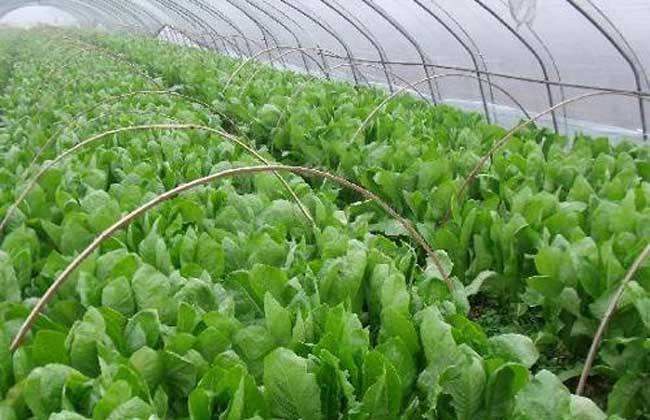
Lettuce has strong adaptability and can be cultivated in spring and autumn or overwintered, and now is exactly the period for cultivating overwintering lettuce. As lettuce plants grow larger, their cold resistance declines, so overwintering lettuce generally needs to be grown in greenhouses, though it can also be grown in open fields in warm-winter regions. It is generally sown from mid-to-late September to early October and goes on the market around Spring Festival. Now let's take a look together with the editor at the growing tips for overwintering lettuce.
1. Sowing and seedling raising
Lettuce seeds are small, so it is best to raise seedlings and then transplant them. Choose a seedbed with loamy soil that has strong fertilizer and water retention capacity and is loose and fertile, and use the broadcast sowing method, sowing 100-150 grams per mu. After sowing, cover with a layer of fine soil, then cover with rice straw to retain moisture. You can also use shade netting laid on the ground to lower temperature and retain moisture. After emergence, remove the covering in time. Once the seedlings are uniform, maintain a seedling spacing of 3-4 cm for thinning, and you can apply one topdressing of 0.3% urea solution to promote seedling growth.
2. Transplanting
Before transplanting, plow the land for 5-7 days. Along with plowing, apply 5000 kg of high-quality organic fertilizer, 50 kg of diammonium phosphate, and 15 kg of potassium sulfate per mu as base fertilizer. Keep the seedling age of overwintering lettuce at 30-40 days, with more than 4-5 leaves, and transplant from late October to November, controlling the plant and row spacing at about 33-40 cm. One day before transplanting, keep the seedbed soil moist and cover with plastic film. Keep more soil around the seedlings and damage the roots as little as possible. Transplanting should be done on a sunny day, and the planting depth should bury all the roots in the soil, but not too deep so as to press the heart leaves. Press the soil lightly around the roots so they are in full contact with the soil.
3. Field management
After transplanting, promptly put the greenhouse film in place, ventilate in time on sunny days, and close the greenhouse in time during cold waves and frost to retain moisture. After the transplants have established, generally water with diluted manure water 2-3 times, and control the temperature to prevent the seedlings from growing leggy. Half a month after transplanting, to prevent the plants from growing leggy, you can spray once with a low concentration of paclobutrazol or chlormequat. If the tender stems still grow too fast, you can delay the market date according to market conditions, or spray chlormequat once every half month to promote the growth of the fleshy stems. Throughout the growing period, keep the soil moist, and control watering before harvest. One month after transplanting, apply heavy fertilizer, applying 10-15 kg of urea, 10 kg of potassium fertilizer, or 50 kg of plant ash per mu.
4. Harvesting
Overwintering lettuce is generally sold around Spring Festival. When the leaves at the top of the plant are level with the outer leaves, it can be harvested. At harvest, cut along the bed surface, then strip off the lower leaves so the stem is exposed, while keeping the upper leaves, so it stays fresh and is easy to sell. If you want to delay harvest, you can pinch off the tips and remove the buds to control the tender stems and prevent them from growing too tall.
The above is an introduction to overwintering lettuce growing tips. We hope it helps you. If you want to learn more related knowledge, please stay tuned to us.