Detailed explanation of Paris polyphylla cultivation techniques, sharing scientific planting methods
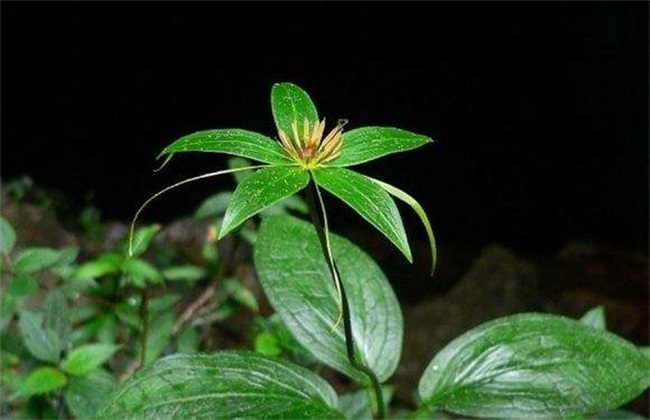
Paris polyphylla is a traditional Chinese medicine, made from the rhizome of Paris polyphylla var. chinensis (seven-leaf-one-flower). Paris polyphylla has many medicinal effects, and its planting area in China is relatively large. Paris polyphylla has various effects such as clearing heat and detoxifying, and anti-inflammatory and analgesic effects. Nowadays, Paris polyphylla can be seen in many traditional Chinese medicine formulas. So how exactly should Paris polyphylla be planted? Below, the editor brings you the cultivation techniques for Paris polyphylla. Let's take a look!
1. Site selection and land preparation
Paris polyphylla does not have very strict requirements for climate and soil, but these conditions will affect the growth ability of Paris polyphylla. Therefore, site selection work should still be done well before planting. A shaded gentle slope land with short-day sunlight should be selected, and the land's water retention and drainage capacity should be maintained. The roots of Paris polyphylla are not distributed deeply, so land preparation should be done well, forming ridges about 1.3 m wide, then applying sufficient farmyard manure, then digging trenches and covering with fertilizer, and hoeing the soil once to keep the fertile soil in the plow layer uniform, then leveling and finely harrowing the soil ready for sowing.
2. Seed propagation
Seed propagation of Paris polyphylla is divided into two types: direct sowing and seedling transplanting, among which direct sowing is best. For direct sowing, in May each year, on the prepared soil ridge surface, the plant and row spacing should be controlled at about 32*22 cm, then sowing holes about 4 cm deep should be dug. Before sowing, the seed treatment work should be done well: soak the seeds in cold water for a whole day, then mix them with plant ash. Then sow about 3 seeds per sowing hole, then cover with a layer of fine soil and dilute manure. Then water thoroughly and cover with a layer of plastic film, and seedlings can emerge after about a week.
3. Field management
After the seedlings emerge, thinning work should be done well, and it should be checked whether there is any missing seedling phenomenon; if so, reseeding work should be done well. Before thinning, water appropriately, and when reseeding, also pour in an appropriate amount of root-setting water to ensure the full seedling rate of the seedlings and control the planting density well. Then we should do the intertillage and weeding work well, because the aboveground part of the Paris polyphylla plant grows relatively weakly, so intertillage and weeding work cannot be ignored. Especially during the rainy season from May to June, when precipitation is relatively high, the soil is prone to hardening, so drainage and waterlogging prevention work should be done well.
4. Water and fertilizer management
Paris polyphylla has a very large demand for nutrients during its growth process, so we should do the fertilization work well. When applying base fertilizer, the amount should be maintained at about 75% of the fertilizer demand for the entire growth period of Paris polyphylla. The amount of topdressing in the later growth stage should be maintained at about 20%. Paris polyphylla likes to grow in a shady and humid environment, so we should pay attention to maintaining the ridge surface application. If drought occurs, water in time, but in rainy days, drainage work should be done well to avoid water accumulation, which leads to the occurrence of pests and diseases.
The above is a brief introduction to the cultivation techniques of Paris polyphylla. That's all for today's introduction. This article is for reference only, and I hope it can help everyone!