What factors affect peanut planting density?
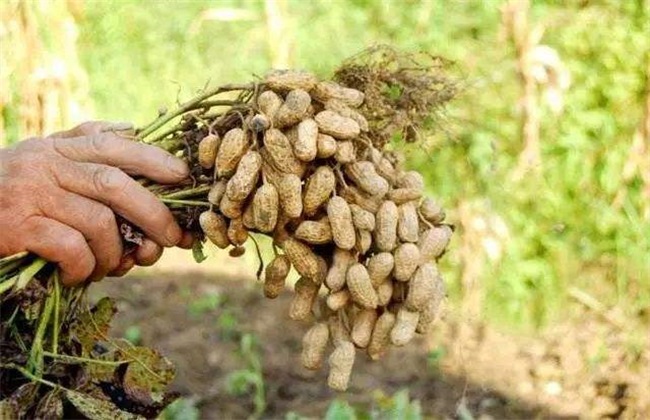
Peanut is one of the main food crops in China. It not only has high nutritional value, but is also a very common oilseed crop in China. Its economic value is very high. At present, the peanut planting area is very large. When planting peanuts, we must pay attention to controlling the peanut planting density well. So what factors affect peanut planting density? Below, the editor will briefly introduce them to everyone. Let's take a look together!
1. Range of rational close planting
When planting peanuts, you must pay attention to controlling the peanut planting density well. Rational close planting of peanuts can increase peanut yield, because this can effectively use light. When planting is too sparse, because the total leaf area of peanut plants is relatively small, photosynthetic capacity will also decrease as a result, leading to lower yield. In a suitable planting density, although increasing the density will reduce photosynthetic productivity, the amount of photosynthetic products will be lower than the increase in leaf area. Therefore, the plants' utilization of light energy is also relatively great, so peanut yield can be increased.
2. Soil fertility
Soil fertility has a very large impact on peanut growth. In an environment with sufficient soil fertility, peanut plants have very strong growth capacity, relatively well-developed roots, tall plants, and more branches. At this time, in order to prevent plants from competing with each other for light, planting density should be appropriately reduced. In the case of shallow soil layers and insufficient fertility, peanut growth will be limited, with short plants and relatively few branches. Therefore, at this time, planting density should be appropriately increased, following the principle of sparse planting in fertile soil and dense planting in thin soil.
3. Variety
Variety is also a main reason affecting peanut planting density. Different varieties have relatively large differences in peanut plant morphology. Therefore, it will also affect peanut planting density, because the growth habits of each variety are different. Therefore, planting density should be controlled well according to the differences among varieties. For example, if it is a creeping-growth variety, sparse planting should be mainly adopted, while upright varieties should be densely planted. If it is semi-creeping, then it should be determined according to the actual situation. Among these, the growth period and branching of the variety are all factors that should be taken into consideration for peanut planting density.
4. Climate
During peanut growth, its development will be affected by climatic conditions. When determining the density for planting peanuts, attention should be paid to adapting to local conditions. If planting in areas with higher temperatures and abundant rain, then peanut growth will be relatively vigorous, and at this time appropriate sparse planting should be adopted. On the contrary, if planting peanuts in areas with drought and little rain, because of lack of water, peanut growth will be hindered to a certain extent, and planting density should be appropriately increased.
The above is a brief introduction to the factors affecting peanut planting density. That is all for today's introduction. This article is for reference only, and I hope it can help everyone!