What to do when soybeans bear few pods? Teach you how to increase the pod-setting rate
Soybeans are cultivated in all parts of China and are one of the country's important economic oil crops, with a cultivation history of 5000 years to date, but soybeans may flower little, bear sparse pods, or even fail to set pods at all. So what should be done when the soybean pod-setting rate is low? Is there any way to increase the pod-setting rate? Let's find out together.
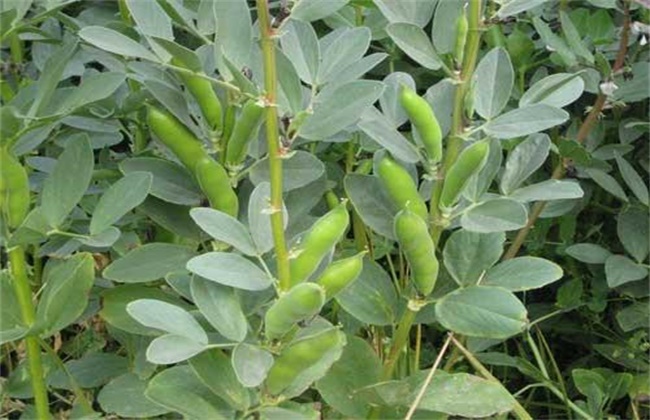
I. Reasons for few or no pods on soybeans
1. Variety reasons. Some farmers may buy seeds of substandard quality, and this can lead to a low soybean pod-setting rate.
2. Seed loss. Many farmers tend to save their own seed, but the seed has not been carefully selected, varies in size and contains many impurities; if mechanical sowing is used, the seed may also be damaged, which likewise has a certain effect on pod setting.
3. Unsuitable for local cultivation. If a southern variety is planted in the north, or a northern variety is planted in the south, a low pod-setting rate will occur. Because soybeans are short-day plants, if the light and temperature requirements are not met, failure to set pods will occur.
4. Over-dense planting. Field aeration is poor, leaves affect each other, photosynthesis is weakened, and soybeans will fail to set pods or set fewer pods.
5. Excessive nitrogen fertilizer application
Soybean roots themselves can produce rhizobia and can supply their own nitrogen. When too much external nitrogen fertilizer is applied, excessive vegetative growth occurs; if growth is not controlled in time, the plants stay green and do not fill, and failure to set pods will occur.
6. Too high temperature. When soybeans are in the flowering and pollination stage, if the temperature exceeds 35°C, flowering and pollination will be affected, and either no pods will be set or the pods set will be shriveled. Likewise, when the temperature is below 15°C, the same problem will occur.
7. Drought and waterlogging. Around flowering, soybeans are relatively sensitive to water demand. If it is too dry and the plants lack water, growth will be slow and pod setting will be difficult; if water accumulates in the field, the roots cannot breathe normally, growth is inhibited, and failure to set pods will also occur.
8. Pests and diseases. There are not many pests and diseases during the soybean flowering period, mainly the soybean pod borer, leaf roller, snails, downy mildew, etc. If control is not timely, they will also harm normal soybean growth and lead to failure to set pods.
II. How to increase the soybean pod-setting rate
First, pay attention when choosing varieties: be sure to choose varieties suited to local cultivation, such as in terms of temperature, humidity, growth period and so on, and try not to choose varieties that have not been grown locally. Soybeans should not be planted too densely, otherwise normal photosynthesis will be affected during flowering and pollination, flowering and pollination will be affected, and the pod-setting rate will decrease. Water management for soybeans must keep up; if drought occurs before and after the flowering and pollination stage, the pod-setting rate will also decrease. In addition, if it rains continuously in summer and water accumulates in the field, a low pod-setting rate will also occur. Fertilization for soybeans differs from that for other crops; nitrogen fertilizer should not be excessive, and the fertilization principle of "applying nitrogen fertilizer appropriately, increasing organic fertilizer, and combining phosphorus, potassium and micronutrient fertilizers" should generally be followed. Pests and diseases have a relatively large impact on soybeans, especially before flowering; if pests and diseases are not controlled in time, the soybean pod-setting rate will also decline. Beta-cypermethrin and chlorpyrifos can be used to control pests, and metalaxyl mancozeb, chlorothalonil and other agents can be used to control diseases.
The above is an introduction to what to do when soybeans bear few pods and how to increase the soybean pod-setting rate. We hope it helps you. To learn more related knowledge, please stay tuned to us.