Detailed explanation of the key management techniques for grafted eggplant seedlings
Eggplant is a very popular fruiting vegetable in our daily lives. Market demand is relatively high, so the planting area of eggplant is now quite wide. When growing eggplant, the commonly used propagation method is generally grafting. After grafting eggplant, attention must be paid to good management. So how exactly should it be managed? Below, the editor brings you the management techniques for grafted eggplant seedlings. Let's take a look!
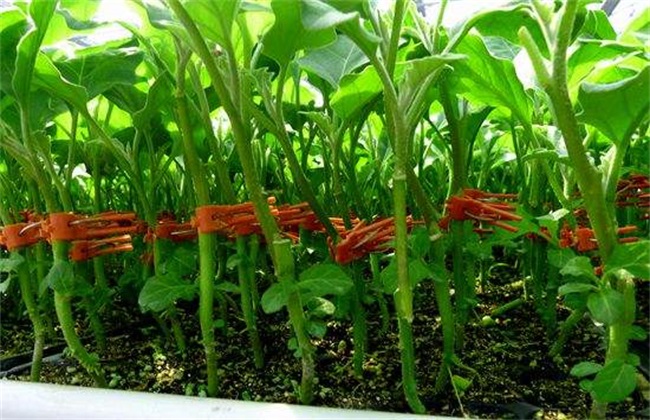
1. Temperature control
After grafting, the temperature for eggplant seedlings must be well controlled. The optimal temperature should be maintained at around 25°C to promote wound healing. The seedbed temperature should be controlled at around 25°C within 4 days, and must not exceed 28°C at the highest. At night, an appropriate day-night temperature difference should be maintained, with the temperature controlled at around 21°C, and not lower than 16°C at the lowest. Temperature is very important for the growth and development of grafted eggplant seedlings, and it is also the key to ensuring wound healing after grafting. Therefore, after grafting, we must pay attention to controlling the temperature to ensure the normal growth of the grafted seedlings.
2. Humidity adjustment
Humidity is also key to whether the grafted seedlings succeed. Likewise, for the seedbed humidity in the first 4 days, the small arch shed should be controlled at around 92%, and then on the fifth day cooling can begin. The cooling method can mainly be ventilation, but humidity should also be maintained at around 85%. This is because grafted seedlings have relatively high water requirements. In an environment with suitable humidity, the growth rate of grafted seedlings accelerates, and their growth capacity is also strengthened. This is also very beneficial for later flowering and fruiting, so humidity control is also something we cannot ignore.
3. Shading management
During the grafted seedling stage, we should pay attention to good shading work. For shading, straw curtains and other materials can be used to cover the small arch shed. If it is an overcast day, then shading is not necessary. Within 3 days after grafting, full shading treatment should be carried out, and then starting from day 4, appropriate light can be provided in the morning and evening each day. However, shading treatment should still be carried out at noon, and then over time the shading materials can be appropriately removed.
When the temperature is relatively low, the time for eggplant to receive light can be appropriately advanced, and the surrounding temperature can be raised to promote faster wound healing. On the contrary, if the temperature is high, shading work must be done well at noon to prevent the seedlings from being exposed to direct sunlight. Under normal management, the graft union will fully heal after about half a month. After healing, the clips can be removed and normal management can be carried out. When the rootstock of the grafted seedling grows side shoots, they should be removed on a sunny morning to avoid consuming too many nutrients and to prevent the wounds from being invaded by pathogens from the soil surface.
The above is a brief introduction to the management techniques for grafted eggplant seedlings. That's all for today's introduction. This article is for reference only, and I hope it can help everyone!