Detailed Explanation of Stephania tetrandra Planting Techniques and Management Methods
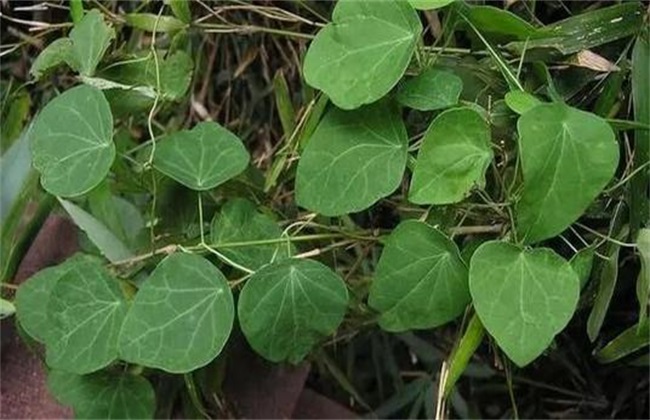
Stephania tetrandra is a common traditional Chinese medicine, often used to treat rheumatism-related joint pain, edema and beriberi, difficult urination, eczema and sores, and other symptoms. It is relatively common in southern regions. Wild Stephania tetrandra is loved by everyone, but this wild plant is gradually being depleted; its wild growth is far outpaced by the rate at which people harvest it, while market demand keeps rising day by day. As a result, artificial cultivation of Stephania tetrandra gradually emerged. So how should Stephania tetrandra be planted?
1. Land preparation
Stephania tetrandra is suited to slightly acidic soil. Generally, land near mountains and forests is more suitable, as such places better match its natural growing environment. Secondly, fertile soil is the guarantee of rapid growth for Stephania tetrandra, so the initial base fertilizer should be plentiful, with more than 200 grams of base fertilizer per seed, mainly farmyard manure. In the early stage, the seeds of Stephania tetrandra are relatively fragile, so the land must be thoroughly turned to reduce the harm of pathogens later on. After about 3-5 days of turning and sunning the soil, divide the land into blocks, leaving irrigation channels of about 10-20 cm in between, with a width of about 1-1.5 m.
2. Propagation methods ⟧7⟧Stephania tetrandra can be propagated by seed or by cuttings. Seed propagation has relatively high temperature control requirements. Generally, seedling raising can begin in spring. The method is similar to that for most seeds: place them in a seedling tray, water them, cover them with straw, and wait for them to sprout before transplanting. Cutting propagation requires selecting high-quality branches of about 2 years for cuttings, which gives the highest survival rate. It starts around early April, with the branches inserted about one-third into the soil and spaced more than 10 cm apart. If the temperature is relatively low, it is best to also use straw for insulation to increase the survival rate.
Stephania tetrandra can be propagated from seeds or by cuttings. Seed propagation has high temperature control requirements, and seedlings can generally be started in spring. The method is similar to that for most seeds: place them in a seedling tray, water them, cover them with rice straw, wait for them to sprout, and then transplant them. For cutting propagation, select high-quality branches about 2 years old for cuttings, as this gives the highest survival rate. Start around early April, insert the branches about one third into the soil, with spacing of more than 10 cm. If the temperature is low, it is best to also use rice straw for insulation to improve the survival rate.
3. Field management ⟧9⟧In the early stage, Stephania tetrandra mainly requires shading treatment for the seedlings, because the seedlings like shade, and this way they grow quickly. After the seedlings have been planted for 2-3 months, the main task is to begin weeding, because during this period Stephania tetrandra cannot compete with weeds in absorbing nutrients. So weed once every 1-2 months or so, and adjust as needed. In the early stage, Stephania tetrandra likes somewhat moist soil; later, it is enough to ensure that the growing environment is relatively shady and humid, without water accumulating. Generally, one topdressing is needed during the flowering period, requiring about 2.5 tons of farmyard manure and 20-30 kg of superphosphate per mu, with other fertilizers supplemented appropriately according to growth. When the seedlings are 30 cm tall, supports need to be set up to give them something to climb on, so they grow faster.
In the early stage, Stephania tetrandra mainly requires shade treatment for the seedlings, because the seedlings prefer shade and grow faster this way. After the seedlings have been planted for 2-3 months, the main task is weeding, because during this period Stephania tetrandra cannot compete with weeds in absorbing nutrients, so weed once every 1-2 months or so, adjusted as needed. In the early stage, Stephania tetrandra prefers slightly moist soil; later, it is enough to ensure that the growing environment is relatively shady and humid, without allowing water to accumulate. Generally, one topdressing is needed during the flowering period, requiring about 2.5 tonnes of farmyard manure and 20-30 kg of superphosphate per mu, with other fertilizers supplemented appropriately according to growth. When the seedlings are 30 cm tall, a support frame needs to be set up so they have something to climb on, which helps them grow faster.
4. Disease prevention ⟧11⟧Common diseases of Stephania tetrandra include leaf spot disease, root rot, aphids, and others, which require targeted treatment. In the hot and humid summer, leaf spot disease is relatively easy to occur. Its most common manifestation is yellowing or discoloration of the leaves, which can be treated by spraying Bordeaux mixture. Root rot is caused by excessive water, as introduced earlier. First drain the water thoroughly, then consider spraying with 0.5% copper sulfate 800-1000 times dilution for treatment. Everyone is probably familiar with aphids; once discovered, they can be treated with dimethoate emulsifiable concentrate. In the early stage, it is best to regularly inspect the growth of Stephania tetrandra plants to see whether there are any abnormalities, so as to reduce losses from diseases.
Common diseases and pests of Stephania tetrandra include leaf spot disease, root rot, and aphids, which require targeted treatment. In hot and humid summers, leaf spot disease is relatively easy to develop, and the most common sign is yellowing or discoloration of the leaves, which can be treated by spraying Bordeaux mixture. Root rot is caused by excessive water as introduced earlier; first drain the water completely, then consider spraying with 0.5% copper sulfate 800-1000 times dilution for treatment. Aphids are a pest that everyone basically knows, and after discovery, dimethoate emulsion can be used for treatment. In the early stage, it is best to regularly check the growth of Stephania tetrandra plants to see whether there are any abnormalities, so as to reduce losses from diseases.
The above are the cultivation techniques for Stephania tetrandra. The cultivation of medicinal herbs generally takes a relatively long time and greatly tests everyone's patience. Many situations may arise when planting Stephania tetrandra. You can refer to the information above to be better prepared.