How to fertilize when growing lotus root? Lotus root fertilization methods and key technical points
Growing lotus root requires fertile soil, which shows that lotus root growth consumes a large amount of nutrients, so when planting, you need to pay attention to how to fertilize and how to do topdressing. What are the fertilizer requirement principles for lotus root, and how do you fertilize according to the growth stage? What kind of fertilizer is suitable at each stage? Please continue reading our introduction below.
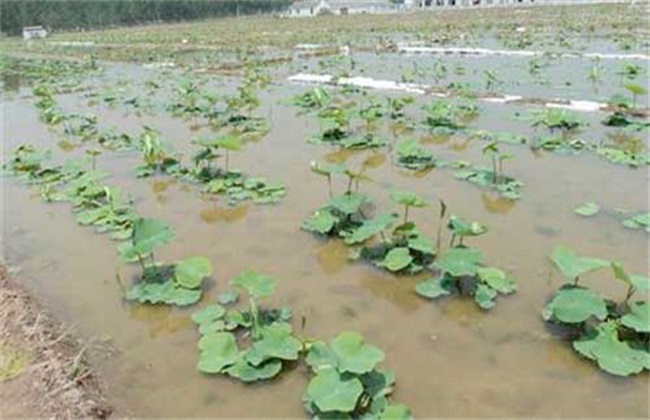
1. Fertilizer requirement principles
Lotus root needs a large amount of fertilizer. If it lacks fertilizer, the plant will be small, the leaves will be small, and the lotus root will also be small. It needs early fertilization, but fertilization also cannot be excessive. Nutrients in the water are consumed relatively quickly, and the best practice is to fertilize the whole pond evenly. Farmed fish and shrimp can improve the micro-environment, and their excrement can serve as fertilizer. Organic fertilizer is more suitable, because the required fertilizer amount is large, it helps fertilize the pond, and the quality is good. Appropriately supplement calcium phosphate; phosphorus is very important for growth.
2. Application of base fertilizer
For a field preparing to grow lotus root for the first time, apply base fertilizer two weeks before planting, deeply plow the soil 30 cm, and rake it level. Apply base fertilizer a few days before planting. Use about 6,000 jin of human and livestock manure per mu, using fully decomposed farmyard manure. In addition, add some chemical compound fertilizer, about 100 jin. If it is a field that has already grown lotus root, applying 3,000 jin per mu is enough. About 60 jin of compound fertilizer. Deep plow and fertilize, and plant in shallow water.
3. Fertilization stages
When leaves begin to grow, apply topdressing once, applying 2,000 jin of manure per mu. Prepare it in advance by fermenting it, then it can be applied. The second topdressing is when the plant has six leaves, with the same amount as the first fertilization. The third is topdressing before flowering, and this time the amount used increases, about more than 2,000 jin. Lotus root generally receives little base fertilizer, and mainly relies on later topdressing.
4. Precautions
Do not fertilize at noon when the sunlight is strong. It is best to fertilize in the morning and afternoon. Fertilizing at lower temperatures is better, because although the fertilizer has been fermented, the fertilizer concentration is too high and can immediately affect growth. Release some water before fertilizing. The water in the pond is generally relatively deep, so the fertilizer cannot enter the soil, and later dissolves in the water, making it not very easy for the roots to absorb. Solid fertilizer is better absorbed than liquid fertilizer. Topdressing can be mixed with mud for easier absorption.
Lotus root cultivation requires a large amount of fertilizer, so sufficient base fertilizer must be applied, and fertilizer must be applied in time at each stage. This ensures good growth.