Key Field Management Techniques for Autumn-Winter Chinese Cabbage
Chinese cabbage can be said to be one of the most commonly eaten vegetables in our daily lives. The nutritional value of Chinese cabbage is very high, and it is welcomed by many people. As we gradually enter autumn, the sowing time for autumn-winter Chinese cabbage has also gradually arrived. When planting autumn-winter Chinese cabbage, management work is very important. So how should autumn-winter Chinese cabbage be managed? Below, the editor brings you the field management of autumn-winter Chinese cabbage. Let's take a look together!
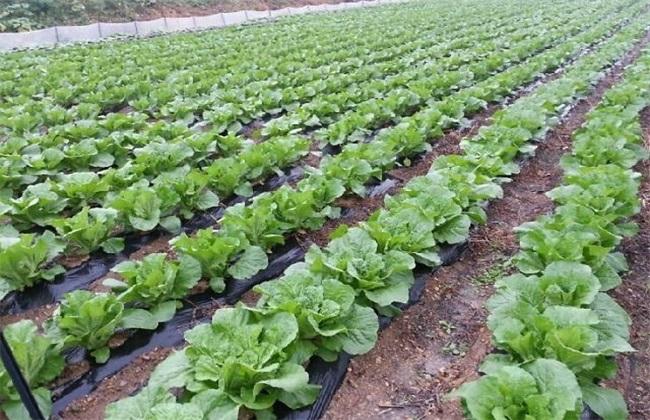
1. Thinning and Final Thinning
During the seedling stage of autumn-winter Chinese cabbage, in order to avoid the phenomenon of crowded and spindly cabbage seedlings, thinning work should be done well. About 3 thinnings should be carried out throughout the entire seedling stage. This is generally done at the cross-shaped stage, the 3-leaf stage, and the 6-leaf stage. When the seedlings grow to 3-4 weeks and enter the rosette stage, the final thinning work should be done well. Plant spacing is controlled according to factors such as variety, water and fertilizer conditions. Generally, the plant spacing for medium-sized varieties of cabbage should be maintained at about 50cm, while for large varieties it should be maintained at about 60cm. If there is a phenomenon of missing seedlings, then seedlings should be replanted in time.
2. Cultivation and Weeding
When thinning the seedlings of Chinese cabbage, it can be combined with cultivation work. The number of cultivations should also be maintained at about 3 times, generally carried out at the second thinning, the final thinning, and the middle of the rosette stage of Chinese cabbage. The first cultivation should mainly be shallow cultivation, the second should appropriately deepen the roots, and the degree of the last cultivation should be such that it does not damage the roots of the cabbage. When cultivating, it should also be combined with weeding and hilling. When hilling, put the soil from the furrow onto the side of the ridge to protect root growth and improve field drainage and irrigation.
3. Water and Fertilizer Management
Whether Chinese cabbage is planted in autumn-winter or spring, the demand for water and fertilizer is very large. Water and fertilizer are also very important for the growth of Chinese cabbage. We should control the amount of water and fertilizer well according to the growth stages of Chinese cabbage. When fertilizing, the type of fertilizer should be controlled well according to the nutritional needs of the cabbage, generally mainly organic fertilizer and fertilizers such as ammonium sulfate. When fertilizing, attention should be paid to controlling the amount of fertilizer applied. Do not apply too much fertilizer to prevent fertilizer damage. The same applies to watering. While meeting the water needs of Chinese cabbage, the amount of watering should be controlled well. Do not water too much, otherwise it will have a great impact on the yield and quality of Chinese cabbage.
4. Pest and Disease Control
The disease resistance of Chinese cabbage is not very strong. During the growth process of Chinese cabbage, common pests and diseases include downy mildew, viral disease, aphids, and so on. The prevention and control of pests and diseases is very crucial and directly affects the yield and quality of cabbage. When planting, we should pay attention to doing management work well. Strengthen water and fertilizer management, cultivation and hilling, and so on. Then disinfect regularly to eliminate pathogens in the field. Also, frequently observe the growth of the cabbage. After discovering abnormalities, promptly identify the cause and then make corresponding treatments.
The above is a brief introduction to the field management of autumn-winter Chinese cabbage. That is all for today's introduction. This article is for reference only, and I hope it can help everyone!