What environmental conditions are needed for growing ginger?
Ginger is a commonly used side ingredient, mainly used for seasoning in our daily lives. The nutritional value of ginger is very high, and it has many beneficial effects and is very good for human health. There is now fairly large market demand for ginger, so the area planted with ginger is also growing larger and larger. When growing ginger, environmental conditions are very important. So today, the editor brings you the environmental conditions for growing ginger. Let's take a look below!
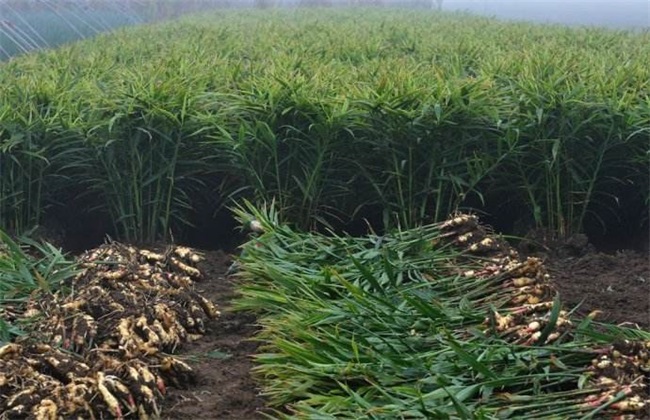
1. Temperature
Ginger originally comes from the tropical regions of our country and likes to grow in warm areas. Therefore, the rhizome growth of ginger has fairly high temperature requirements. After sowing, the temperature must be controlled at around 16-18 degrees to ensure that ginger sprouts smoothly. Within a temperature range of 20-25 degrees, the growth rate of the ginger pieces speeds up, and the average monthly temperature should be controlled at around 25-28 degrees, which is most favorable for the tillering of the rhizome. If the temperature is below 15 degrees, then ginger will stop growing, and below 10 degrees, ginger pieces are very prone to rotting.
2. Light
During growth, ginger's light requirement is of medium intensity, and ginger's tolerance of strong light is fairly poor. Changes in the growth stage also lead to different light requirements. For example, during the sprouting stage, dim light should be maintained, while during the seedling stage, medium light conditions should be provided. However, if the light is too strong, shading work should be done well, otherwise the impact on plant growth is very great. After entering the vigorous growth period of ginger, ginger has more branches, and the plants provide shade for each other, so the demand for light also increases. Usually, during the growing season of ginger, natural light can meet ginger's light needs.
3. Water
Water is very critical to the growth of ginger. Ginger's roots are not deeply distributed, and its tolerance of both drought and waterlogging is very poor. The water content of the stems and leaves of the aboveground part of ginger is about 88%, and because ginger's branches and leaves are fairly lush and water evaporation is large, watering work should be done well when planting to ensure normal growth of ginger. During the seedling stage of ginger, the ginger seedlings grow fairly slowly and the amount of growth is also fairly small, so the demand for water is not great. However, if the seedling stage is in a period of high temperature and drought, then a certain amount of moisture should still be maintained. Otherwise, it will inhibit the growth of the seedlings and reduce the yield.
4. Soil
Ginger's soil requirements are not very strict, and it can grow normally in most soil types. The most suitable soil for ginger growth is topsoil with moderate sandiness, strong permeability, and a fast warming rate, which is very favorable for the overall growth of seedling plants. The lower soil layer should have good water and fertilizer retention to promote rhizome expansion. Ginger's tolerance of strong acids and strong alkalis is not very strong, and the pH value should be controlled at around 6. If the pH value exceeds the range of 5-8, then it will inhibit plant growth and reduce the yield and quality of ginger pieces, so everyone should pay close attention.
The above is a brief introduction to the environmental conditions for growing ginger. That is all for today's introduction. This article is for reference only, and I hope it can help everyone!