How to manage autumn Chinese cabbage during the seedling stage? These technical key points must be mastered
Right now is the time when many regions plant autumn Chinese cabbage, and in many regions autumn Chinese cabbage has also entered the seedling-stage management phase, so how should autumn Chinese cabbage be managed during the seedling stage to achieve high yields? Follow the editor to take a look at the detailed introduction below.
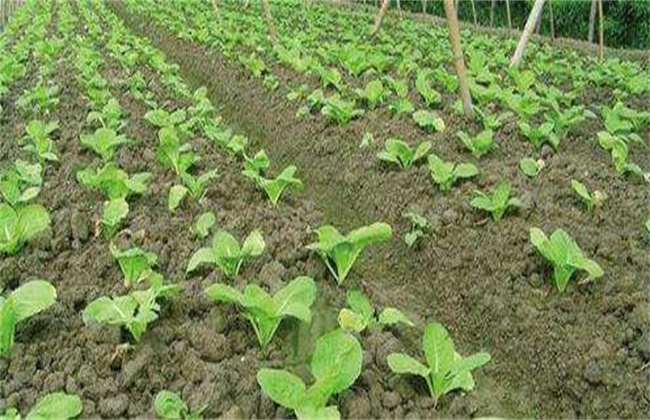
1. Thinning during the seedling stage
During the seedling stage, the issue of planting density must be carefully considered. Planting too densely or too sparsely will affect the later yield of autumn Chinese cabbage. Generally speaking, the spacing of autumn Chinese cabbage should be kept at about 25-30 cm. When the cabbage has grown two true leaves, thinning can be carried out once, and when it has grown 3-4 true leaves, thinning can be carried out again. While thinning, seedlings with strong growth should be retained, and seedlings with weak growth and those infected with pests and diseases should be removed, ensuring that the seedlings grow robustly.
2. Fertilizer and water management
Chinese cabbage has a relatively large demand for fertilizer and water during its growth process. Before planting, base fertilizer must be applied in sufficient quantity. After planting, watering should be done appropriately according to the field growth conditions of the Chinese cabbage to promote its growth and development. However, during continuous rainy weather, attention must be paid to timely drainage and waterlogging prevention, so as to avoid water accumulation causing root rot of the Chinese cabbage or the occurrence of root rot disease, which is extremely unfavorable to the growth of Chinese cabbage and also has a relatively large impact on later yield.
3. Pest and disease control
During the seedling stage of Chinese cabbage, attention must also be paid to the prevention and control of pests and diseases. The temperature in the early autumn is still relatively high, and it is the peak period for the occurrence of cabbage caterpillars and armyworms. When the pest infestation is severe, basically in 2-3 days the cabbage seedlings will become bare stalks, so control measures must be well implemented. In addition, during the seedling stage, diseases such as damping-off, seedling blight, and downy mildew will also seriously affect the growth of Chinese cabbage and at the same time reduce yield. Therefore, although pest and disease control during the seedling stage is important, prevention is even more proactive.
The above is an introduction to how autumn Chinese cabbage should be managed during the seedling stage. We hope it can help you. If you want to learn more related knowledge, please stay tuned to us.