How to manage Atractylodes lancea cultivation? Detailed explanation of key technical points
Atractylodes lancea is a perennial herbaceous plant, and its underground rhizome can be used as a traditional Chinese medicinal material. It is mainly divided into northern production and southern production. How should it be managed when growing wild in shaded mountain forests at low altitude, and what basic conditions should be provided during artificial cultivation, and how should it be managed? Now let us learn about it together.
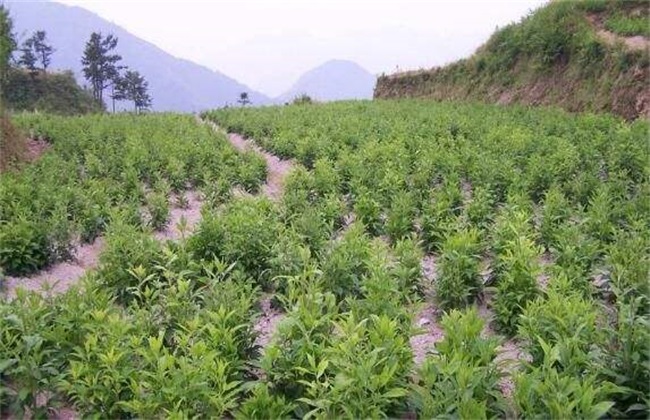
1. Intertillage and weeding
During the seedling stage, shortly after emergence, because emergence requires heat preservation and moisture retention, some fallen grass seeds in the soil are also cultivated out, and they even grow better than the plants. Therefore, they must be pulled out. Generally, they can be pulled out each time the growth condition is checked. After transplanting, weeding is generally done together with loosening the soil. If the soil is relatively dry when loosening the soil, some water can be poured, and after it seeps in, loosen the soil again to avoid damaging the roots.
2. Topdressing management
The first topdressing is in May, applying dilute manure water, 2,000 jin per mu. The second is after one month. The main purpose of fertilizing is to promote growth, using more than 2,500 jin per mu, adding 10 jin of ammonium bicarbonate, or 10 jin of urea, to supplement nitrogen fertilizer and increase photosynthesis. The last time is before flowering, using 3,000 jin of livestock manure per mu. Some plant ash can also be used as a supplement, 100 to 200 jin per mu is fine.
3. Water control
For routine watering, if the soil is dry after digging down two cm, water promptly. If only the surface layer is dry, there is no rush to water. Generally maintain 65% humidity. If drought occurs and moisture is basically lost, then water promptly. After rain, humidity increases rapidly, so drain immediately, open ditches to guide the flow, and then sprinkle some plant ash to absorb moisture. Prevent the root system from being soaked and rotted.
4. Disease control
The common disease is root rot. Many crops are harmed by root rot. Generally, a major factor in the occurrence of root rot is water accumulation. After the disease occurs, drain promptly and pull out the diseased plants to prevent spread. Generally, spray with a 1000-fold solution of 50% Tuzet wettable powder, or spray with an 800-fold solution of 50% Topsin.
Atractylodes lancea cultivation management needs attention to weeding, intertillage, fertilizing, drainage and irrigation, and other such matters. It cannot be managed extensively. Only with good management will growth be good.