Full Analysis of the Key Techniques for Growing Rhubarb from Seed
Rhubarb generally refers to the medicinal plant known as Chinese rhubarb (Rheum officinale), a domestic Chinese rhubarb, whereas in Europe it is generally the culinary rhubarb. Medicinal rhubarb has the effects of clearing heat and removing dampness, cooling the blood and detoxifying, and purging fire and dispelling stasis. It is mainly distributed in the southwest and northwest regions. Rhubarb can be propagated artificially from seed and then planted and cultivated. However, certain conditions need to be provided for cultivation and management. So let us take a look together now.
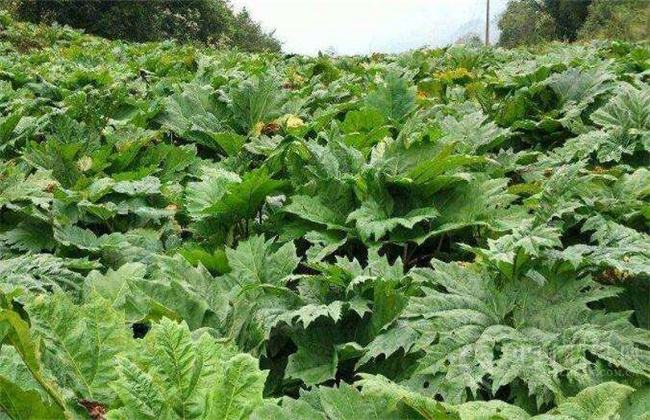
1. Growing Conditions
It grows wild in mountainous areas at an altitude of around 2,000 m, and artificial cultivation must be carried out at an altitude of more than 1,400 m. It cannot be grown in continuous cropping, prefers cool conditions, is fairly cold-tolerant, cannot tolerate drought, and cannot tolerate high temperatures; high temperatures must not exceed 30°C, but it can survive low temperatures above minus 10°C. It needs deep soil, preferably sandy loam rich in organic matter and with very good drainage. Take special care not to sow it in clayey, acidic soil or soil that easily becomes waterlogged.
2. Seed Collection
The seeds mature in July, and at this time the stems can be cut to harvest the seeds, but generally the stems are cut and harvested when the seeds turn black. After drying them in the shade at home, they can be threshed, the seeds screened, impurities removed, and shriveled and damaged seeds discarded. The plants from which seeds are collected must be pure varieties that have been grown for three years, so as to maintain the purity of the variety; otherwise the quality will decline.
3. Sowing and Raising Seedlings
When planting, you can sow directly or raise seedlings and then transplant them. Autumn is relatively suitable for planting, raising seedlings and transplanting. Build a seedbed 1.5 m wide and of unlimited length, spread the seeds evenly over the bed surface, and cover with a thin layer of soil, about 1 to 2 cm. Then cover with some grass to retain moisture. Once 80% have germinated, the rice straw can be removed. When the seedlings are all up, weed, water, and thin them.
4. Seedling Management
During the seedling stage, apply organic fertilizer about three times. For those that have not germinated by winter, wait until they germinate the following spring and then remove the covering grass. For spring sowing, transplant in the spring of the following year; for autumn sowing, transplant in the autumn of the following year. When transplanting, prune the root system. Dig holes 30 cm deep and plant, with a row spacing of 0.7 m and a plant spacing of 0.5 m. Do not cover with soil too deeply. But for autumn transplanting, the soil cover can be a little deeper to avoid frost damage in winter.
The above is the content on growing rhubarb from seed. You can refer to it for understanding, and you can also sum up more experience, or consult people with experience.