Why Does Celery Crack at the Root? Causes and Preventive Measures Explained
Celery is a type of celery, and its stalks are thick and sturdy. During cultivation, root cracking often occurs. Root cracking is actually stalk cracking, mostly manifested as the base of the stalk splitting open together with the leaf stalks. This phenomenon not only reduces quality, but also allows pathogens to invade through the cracks, causing root problems. So what causes root cracking in celery? How can it be prevented? Let's learn about it together.
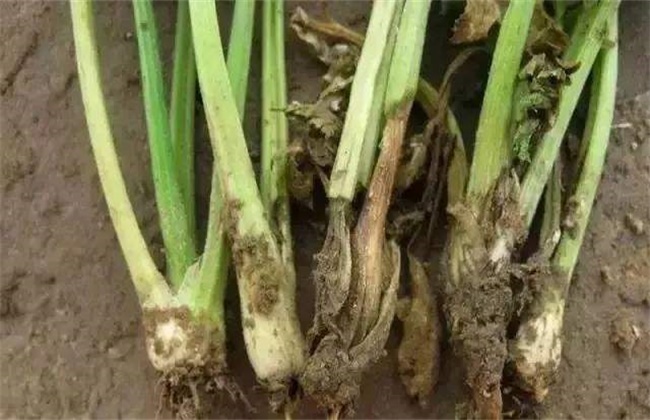
I. Causes of Root Cracking in Celery
1. Under high temperature and drought conditions, the growth and development of the plant are inhibited. Under sudden high temperature and high humidity conditions, because the plant's water absorption capacity is too strong, the tissue becomes filled with water and expands, causing root cracking.
2. Like high temperature and drought, low temperature and drought can also inhibit celery growth and cause cutinization of the epidermis. When high temperature, heavy rain, or excessive watering then occurs, the stalk tissue rapidly expands, causing the cutinized epidermis to crack and resulting in root cracking.
3. During the growth process, celery needs a large amount of boron. If boron is deficient, it will cause the stalks to crack, mostly on the outer leaves, mainly with part of the epidermis on the inner side of the leaf cracking. If boron is deficient during the development of the heart leaves, the inner tissue of the heart leaves turns brown and develops cracks.
II. Preventive Measures
1. During the seedling stage of celery, thin the seedlings in time to promote thick leaf stalks and root development, and water reasonably to avoid excessive field humidity. When the seedlings have 3-4 leaves, water alternately between dry and wet to promote root development, cultivate strong seedlings, and improve stress resistance and disease resistance.
2. Plant at the right time. After planting, focus on promoting root development to increase the plant's drought resistance and low-temperature resistance. Therefore, in the early stage after planting, control water appropriately, strengthen intertillage, and increase soil permeability, so as to prevent low temperature from affecting its growth and development.
3. Strengthen field management, deep plow the soil, apply more organic fertilizer, promote root development, and enhance the plant's drought resistance. After planting, do not water too much, but avoid mainly part of the epidermis on the inner side of the leaf cracking. In addition, if boron is deficient during the development of the heart leaves, the inner tissue of the heart leaves turns brown and develops cracks.
4. Fertilization should be balanced. Apply more organic fertilizer and farmyard manure to promote root growth and development. During the mid-growth stage, topdress in time to prevent the plant from losing fertilizer or premature aging. At the same time, control the environmental temperature and soil moisture, spray foliar fertilizer and compound micronutrient fertilizer, and especially pay attention to the application of boron fertilizer to prevent physiological boron deficiency in celery.
The above is an introduction to the causes of root cracking in celery and preventive measures. We hope it can help you. If you want to learn more related knowledge, please follow us.